


Introduction
The global automotive industry is undergoing one of the most profound transformations in its history. At the heart of this revolution lies artificial intelligence—powering autonomous vehicles, optimizing decision-making, enhancing safety systems, and enabling machines to interpret the complex realities of the road. Over the past decade, advancements in machine learning, computer vision, sensor fusion, cloud computing, and edge AI have driven the industry toward a future in which self-driving transportation is not just possible but inevitable.
This shift is not being led solely by traditional automakers. Instead, a new wave of technology-first companies, semiconductor leaders, AI software innovators, and data-driven mobility firms are taking center stage. Their products—whether advanced processors, autonomous driving software platforms, robotaxi fleets, or intelligent mobility ecosystems—are shaping a trillion-dollar future.
As investors worldwide search for long-term high-growth opportunities, autonomous vehicle (AV) AI stocks have emerged as a focal point. These companies sit at the intersection of technology, transportation, energy, and consumer behavior. The AV market is projected to grow exponentially in the coming years, driven by rising adoption of electric vehicles, growing investments from governments and corporations, urban mobility challenges, and the push toward reducing human error—the leading cause of road accidents globally.
This article explores the forefront of this transformation by focusing on three essential dimensions: the technological leaders building the core AI infrastructure for AVs; the companies at the forefront of democratizing autonomous mobility; and the strategic trends shaping the future of AV AI investing. By understanding these forces, investors and enthusiasts alike can better appreciate the companies that are driving the next era of transportation.
AI & Chipset Innovators Powering Autonomous Transportation
Behind every autonomous vehicle lies a dense network of decision-making algorithms, real-time data processing, and advanced computing systems. Companies leading this domain include AI chip manufacturers, software-focused firms, and sensor-technology developers. Their innovations form the backbone of all self-driving systems.
AI Chips: The Brain Behind Self-Driving Cars
Autonomous vehicles depend on immense computational power. They must analyze camera feeds, detect objects, forecast traffic patterns, interpret maps, and calculate safe paths—all within milliseconds. This requires specialized hardware that far exceeds the capabilities of traditional CPUs.
Semiconductor leaders like NVIDIA, Intel’s Mobileye, AMD, and Qualcomm are competing fiercely to supply the “brains” of autonomous vehicles. These chips handle deep learning models, graphics processing, sensor data fusion, and millions of road-decision simulations per second. The surge in demand for AVs is directly driving demand for these processors.
The more sophisticated autonomous systems become, the greater the need for powerful AI chips. Companies innovating in this space benefit from long-term supply contracts with automakers, high switching costs, and a substantial competitive moat driven by proprietary architectures and software ecosystems.
Computer Vision & Sensor Fusion Technologies
Autonomous vehicles rely on an array of sensors including LiDAR, radar, ultrasonic detectors, and cameras. These sensors generate vast amounts of data every second, forming a real-time digital perception of the environment.
Companies specializing in sensor technologies—including LiDAR manufacturers, imaging-chip producers, and radar system providers—are crucial for AV development. Computer vision AI software interprets this sensor data to identify pedestrians, traffic signs, vehicles, and obstacles.
As improvements in perception technology continue, the accuracy and reliability of autonomous systems increases, allowing for higher levels of autonomy. Firms leading innovation in this domain are not just hardware suppliers but essential enablers of the entire AV ecosystem.
Software Platforms for Autonomous Driving
Even the most advanced sensors and chips require highly refined AI software to orchestrate the entire self-driving process. This includes mapping, localization, path planning, and behavioral prediction.
AI software providers are increasingly becoming valuable players in the AV market. They are designing scalable platforms capable of being integrated into a variety of vehicles. Their revenue models often include licensing agreements, subscriptions, and long-term partnerships.
These companies are particularly attractive to investors because software enjoys high profit margins, recurring revenue opportunities, and flexibility to serve both consumer and commercial markets.
Overall, AI chipset innovators and software developers are the core pillars of autonomous driving. Their breakthroughs are not only enabling current AV systems but are also pushing the technology closer to full automation.
Autonomous Mobility Leaders Driving Real-World Deployment
While hardware and AI engines form the foundation of autonomous vehicles, mobility companies are the ones converting technology into real-world transportation solutions. These players focus on deploying AV fleets, building autonomous mobility platforms, and integrating automation into commercial industries such as logistics and public transport.
Robotaxi Ecosystems and Autonomous Ride-Hailing
Autonomous ride-hailing—better known as robotaxi services—represents one of the most promising applications of AV AI technology. These services aim to replace traditional taxis and ride-sharing vehicles, offering safer, more efficient, and more scalable urban mobility systems.
Robotaxi operators are designing advanced autonomous driving software, forming partnerships with vehicle manufacturers, and building operational frameworks for managing fleets. Deployments in several global cities have already demonstrated the feasibility and potential profitability of this model.
From a business perspective, robotaxis offer recurring revenue potential, scalable fleet expansion, and long-term savings due to reduced labor costs. As regulatory approval grows and cities adopt more intelligent transport systems, the commercial viability of robotaxis will increase dramatically.
Autonomous Logistics and Freight Operations
Beyond passenger transport, autonomous driving is transforming logistics, delivery, and freight industries. Companies developing AI-driven trucks and delivery bots are making significant strides in long-distance shipping, urban deliveries, and warehouse automation.
Long-haul trucking automation is especially attractive because it addresses key industry challenges:
- driver shortages
- rising transportation costs
- demand for 24/7 continuous operations
- fuel efficiency improvements through optimized AI routing
- safer travel due to reduced human error
Autonomous delivery robots and drones further complement this ecosystem, enabling last-mile delivery for e-commerce and retail.
Intelligent Mobility Infrastructure and Smart Cities
Smart mobility requires more than vehicles; it needs infrastructure capable of supporting AV behavior. AI companies are partnering with governments to develop:
- intelligent traffic management systems
- V2X (vehicle-to-everything) communication
- smart road sensors
- cloud-based navigation networks
- connected charging stations for electric autonomous fleets
These systems allow vehicles to exchange data with roads, traffic lights, and even other vehicles. Such interconnected mobility will drastically reduce congestion, improve safety, and enable smoother autonomous operations.
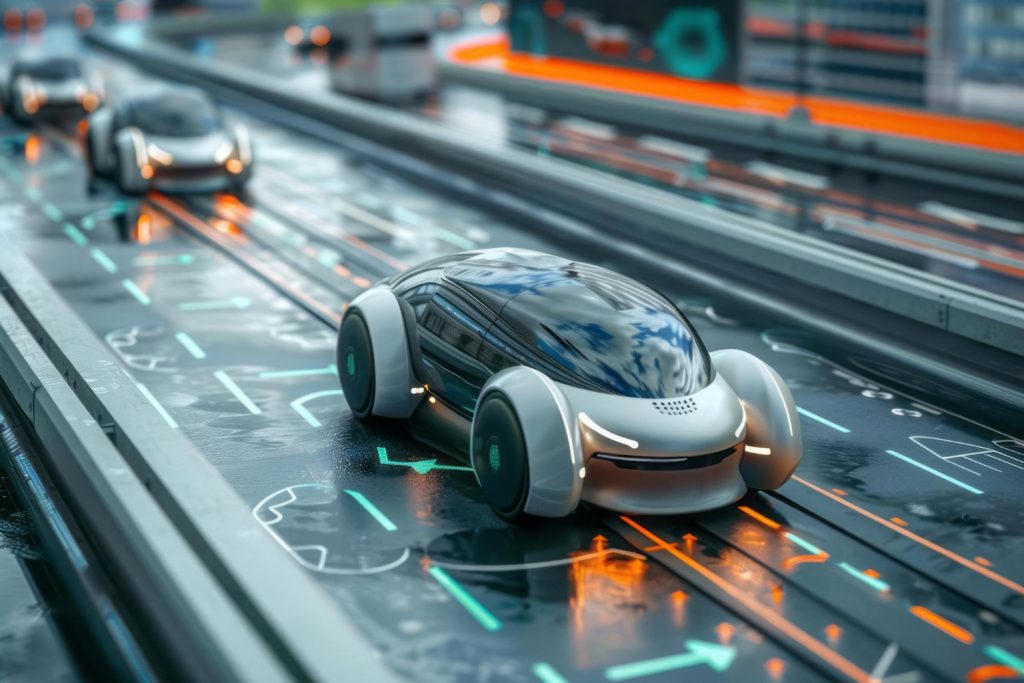
The companies developing these platforms are becoming essential components of future urban planning. Their technologies will influence how people commute, how goods move, and how cities grow.
Manufacturers Transforming into Autonomous Mobility Providers
Traditional automakers are increasingly reinventing themselves as technology companies. Many have invested heavily in in-house AI development, acquisitions of robotics firms, and strategic alliances with semiconductor giants.
These companies are launching autonomous-ready vehicles, integrating advanced driver-assistance systems, and working toward Level 4 and Level 5 autonomy. Their transition marks a critical moment in automotive history—one where the boundary between auto manufacturing and software engineering becomes blurred.
Together, these mobility leaders are building the foundation of tomorrow’s transport ecosystem. Their commercial advancements demonstrate that autonomous vehicles are not mere concepts but fast-approaching realities.
Investment Trends and Strategies in Autonomous Vehicle AI Stocks
The autonomous vehicle AI sector sits at the intersection of multiple high-growth industries: artificial intelligence, semiconductors, robotics, electric vehicles, cloud computing, and mobility services. For investors, understanding the dynamics of this market is crucial to identifying stocks poised to shape the future.
Long-Term Growth Potential of the AV Industry
The growth trajectory of the autonomous vehicle industry is fueled by several structural forces:
- Increasing demand for safer transportation
- Expansion of urban populations and smart-city initiatives
- Rapid advancements in AI algorithms
- Falling costs of sensors and hardware
- Rising adoption of electric vehicles
- Growing investments by corporations, governments, and venture capital
- Strong consumer interest in intelligent driving solutions
The convergence of these trends suggests that autonomous technology will become mainstream over the next decade. Early investors in AV AI stocks may benefit from exponential growth as adoption accelerates.
Key Market Drivers Pushing AV Stocks Forward
Several major drivers are boosting the prospects of companies in this space:
- Safety Innovations
AI-driven perception systems significantly reduce accidents caused by human error. - Economic Efficiency
Autonomous fleets lower operational expenses and maximize vehicle utilization. - Environmental Sustainability
Electrification combined with autonomous optimization improves energy efficiency. - Government Regulations and Support
Many countries are updating policies to support AV testing and deployment. - Technological Synergy
Integration of 5G, cloud computing, and edge AI offers performance enhancements.
These forces create a fertile environment for AV stocks to thrive.
Risks and Challenges in AV AI Investing
While the industry offers immense potential, investors must also consider key challenges:
- High development and testing costs
- Complex regulatory environments
- Cybersecurity threats
- Ethical concerns involving AI decisions
- Long timelines for full commercial deployment
- Competitive pressures from both tech companies and automakers
Understanding these risks helps investors make balanced, long-term decisions.
Investment Strategies: How to Approach AV AI Stocks
Investors can explore several approaches when adding autonomous vehicle AI stocks to their portfolios:
- Chipset and Hardware Leaders
These companies provide the essential computing power for all autonomous vehicles. - AI Software Providers
Firms specializing in mapping, perception, and autonomous driving software offer recurring revenue potential. - Autonomous Mobility Platforms
Robotaxi companies and logistics providers represent major future revenue streams. - Automakers Transitioning to AI-Driven Models
Traditional companies with strong EV and AV strategies are increasingly attractive. - Infrastructure & Smart Mobility Ecosystem Stocks
These include cloud, traffic AI, and sensor infrastructure providers.
A diversified approach across these segments allows investors to capture the full spectrum of AV growth.
The Next Decade: What the Future Holds
The 2025–2035 period will likely witness:
- widespread adoption of autonomous ride-sharing
- integration of AI-driven safety systems in all major car models
- intelligent traffic systems in major cities
- global expansion of autonomous logistics
- major leaps in AI chip efficiency
- reduced costs of LiDAR and advanced sensors
- stronger investor confidence as regulations mature
Autonomous vehicles will not only redefine transportation but also catalyze growth in adjacent industries—from insurance to urban planning to energy.
The companies that lead this transformation will shape the future of global mobility—and their stocks may become long-term growth engines for forward-thinking investors.
Conclusion
Autonomous vehicle AI represents one of the most transformative technologies of the 21st century. It merges artificial intelligence, robotics, transportation, urban planning, and energy innovation into a single, powerful ecosystem. At its foundation are the companies developing advanced AI chips, sensor systems, and software platforms—technologies that enable vehicles to perceive, analyze, and react to the world around them.
Beyond the foundational technology, mobility leaders are converting innovation into practical applications, from robotaxi networks to autonomous logistics, creating new business models and operational efficiencies. Their work is turning AVs into viable transportation solutions poised to reshape society.
The investment landscape for AV AI stocks is equally compelling. As governments push toward safer roads, cities embrace intelligent mobility, and corporations invest in automation, the industry is set for strong long-term growth. While challenges remain, the trajectory is clear: autonomous vehicles will play a central role in the future of transportation.
For investors, understanding the companies driving this revolution is essential. Whether through semiconductor innovation, AI software leadership, autonomous mobility platforms, or smart infrastructure technologies, these organizations are shaping the next era of global mobility.
The future of transportation is intelligent, autonomous, and driven by AI—and the stocks leading this transformation stand at the forefront of a historic technological shift.