

Introduction
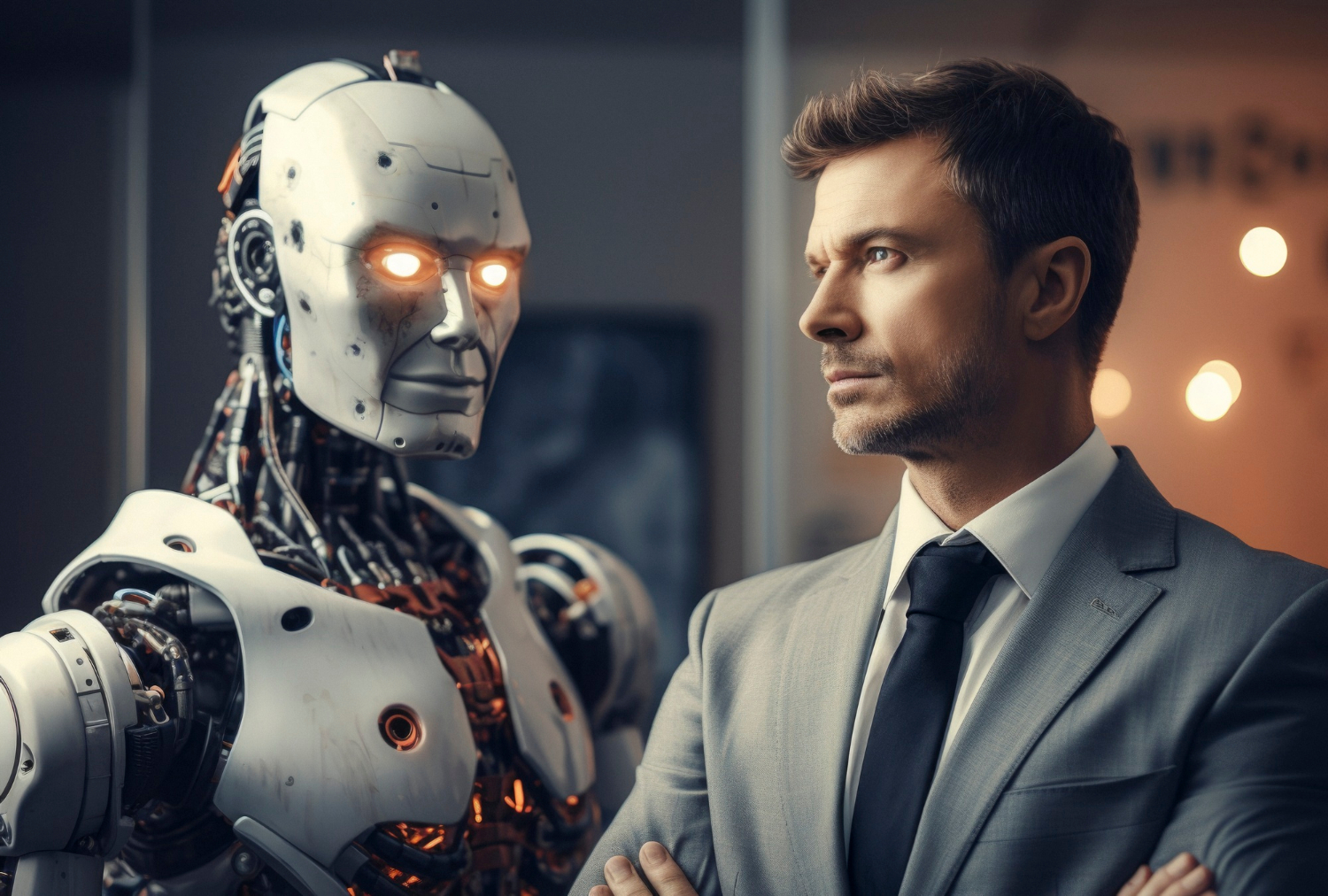
Financial markets have never been as fast, complex, or competitive as they are today. With algorithmic trading dominating global exchanges and machine learning reshaping market analysis, a vital question emerges: Are AI trading bots outperforming human traders—or will human intuition remain irreplaceable? This debate is no longer theoretical; it defines modern investing strategies, hedge-fund operations, retail trading habits, and the overall structure of global markets.
AI trading bots are programs that use pre-defined logic, machine learning models, statistical methods, and real-time data to execute trades automatically. They can operate 24/7, analyze millions of data points per second, and make emotionless decisions. Human traders, on the other hand, rely on analytical skills, experience, intuition, and psychological resilience. Their decision-making is slower but contextual, adaptive, and capable of understanding abstract signals AI may miss.
This article explores the battle between machines and humans, examining performance, strategy, psychology, risk management, and future trends. With only three major sections, we dive deep into how these two forces compete and complement each other in the evolving landscape of trading.
Speed, Efficiency, and Data Processing: Why Bots Dominate Logic While Humans Master Context
In the modern market, speed is not just an advantage—it is a requirement. High-frequency trading (HFT) firms use ultra-low-latency systems capable of executing trades in microseconds. Retail bots running on cloud servers can still analyze more data in a minute than a human can in a week. This gives AI an undeniable edge in terms of mechanical efficiency.
Data Processing Power
AI bots can digest massive datasets: historical charts, macroeconomic indicators, order-book depth, sentiment analysis, alternative data like satellite imagery, and even social-media sentiment. Humans simply cannot review these inputs with the same speed or accuracy. Furthermore, machine learning models recognize nonlinear patterns that traditional human-driven technical analysis often fails to identify.
However, raw data processing is not the same as understanding. Humans excel at interpreting subtle cues—executive interviews, geopolitical tensions, legal developments, or cultural shifts. For example, a human trader may intuitively understand that a CEO’s tone during an earnings call signals uncertainty, even if the numbers look fine. AI sentiment analysis can detect keywords and tonal patterns but may misinterpret sarcasm, strategic ambiguity, or nuance.
Execution Speed
Bots have zero reaction time. They execute the moment their algorithm’s conditions are met. Humans, constrained by physical limits, emotional reactions, or multitasking, may hesitate or act too late. Bots never second-guess, never get tired, and never suffer from fear or greed.
The Context Gap
AI’s weakness appears when markets become chaotic or unexpected. Black swan events—COVID-19, geopolitical conflicts, sudden policy announcements—often break algorithmic models because the data patterns they rely on disappear. During such periods, human traders who understand fundamentals and macroeconomics often outperform bots.
Thus, while AI dominates mechanics, humans continue to dominate contextual reasoning.
Emotion, Psychology, and Behavioral Discipline: The Machine Advantage vs. the Human Curse
One of the greatest challenges in trading is managing human psychology. Fear of loss, greed, FOMO, hesitation, overconfidence, and panic have destroyed countless accounts. AI systems are immune to emotional impulses, giving them a massive structural advantage.
The Emotional Trap for Human Traders
Even experienced traders struggle with psychological biases:
- Loss aversion makes traders hold losers too long.
- Greed leads to oversized positions.
- FOMO pushes traders into overbought markets.
- Revenge trading after losses can wipe out accounts.
- Confirmation bias leads traders to see only what they want to see.
No amount of training can remove these behavioral flaws entirely. Humans are emotional beings, and markets are designed to exploit those emotions.
Why Bots Excel in Discipline
AI trading bots follow their rules exactly. If a stop-loss triggers, they exit. If take-profit hits, they close. They do not double down impulsively or try to “win back losses.” A well-designed bot enforces perfect discipline with zero psychological leakage.
But there is a catch.
Bots do not understand why the rules exist—they simply follow them. If market conditions change and the algorithm is not updated, it may repeatedly lose money while still behaving “perfectly.”
Over-Optimization and Model Fragility
Some AI systems perform extremely well in backtesting but fail in real markets due to overfitting. By optimizing too precisely for historical data, they lose generalization ability. This is a psychological problem inverted: instead of emotional human mistakes, it is computational rigidity.
Humans make emotional mistakes, but they can also recognize when “something feels off.” Sometimes intuition serves as a form of pattern recognition that has not yet been formalized in data.
Market Psychology Understanding
Humans can understand narratives: election cycles, inflation fears, consumer confidence, sector rotations, and innovation trends. Algorithms can measure behavior but struggle to understand narratives, which often drive markets more than fundamentals.
Therefore, while bots crush humans in discipline, humans still outperform in abstract reasoning and narrative interpretation.
Profitability, Risk Management, and Long-Term Strategy: Who Truly Wins?
The ultimate question is not about speed or psychology but profitability. Which approach consistently delivers better returns with manageable risk?
AI Profitability
Quant funds using AI and algorithmic strategies, like Renaissance Technologies or Two Sigma, have recorded extraordinary returns. Their models use vast datasets, machine learning, and statistical arbitrage. But these firms are run by teams of highly skilled human quants—not bots alone.
Retail AI bots are more complicated. Many commercial bots sold online promise unrealistic returns. When users deploy them without understanding market conditions, they often fail.
A bot is only as good as the logic or model behind it.
Human Profitability
The best human traders—Warren Buffett, Paul Tudor Jones, Ray Dalio, George Soros—have built careers on fundamental analysis, macroeconomic understanding, risk management, and adaptive thinking. No AI bot today can replicate the multifactor reasoning behind such long-term strategies.
Humans excel at:
- Interpreting political shifts
- Understanding innovation cycles
- Detecting long-term market rotations
- Identifying company leadership quality
- Timing value investments
AI excels at short-term statistical patterns, not long-range strategic insights.
Risk Management
Bots follow strict risk rules, but they cannot perceive new risks unless programmed. Humans, while sometimes irrational, can avoid disaster by spotting early warning signs.
Hybrid Trading Models: The Real Winner
Most sophisticated institutions use a hybrid system:
- AI bots for execution, pattern detection, and micro-opportunities
- Human traders for macro decisions, strategic direction, and risk oversight
This combination consistently produces the best results. Machines handle speed, humans handle meaning.
Retail Traders and Accessibility
AI bots make advanced trading accessible to retail traders who lack time or expertise. But many rely on black-box bots without understanding them. Without proper knowledge, automation becomes dangerous.
Therefore, the winner is not clearly AI or humans—it depends on how intelligently each is deployed.
Conclusion
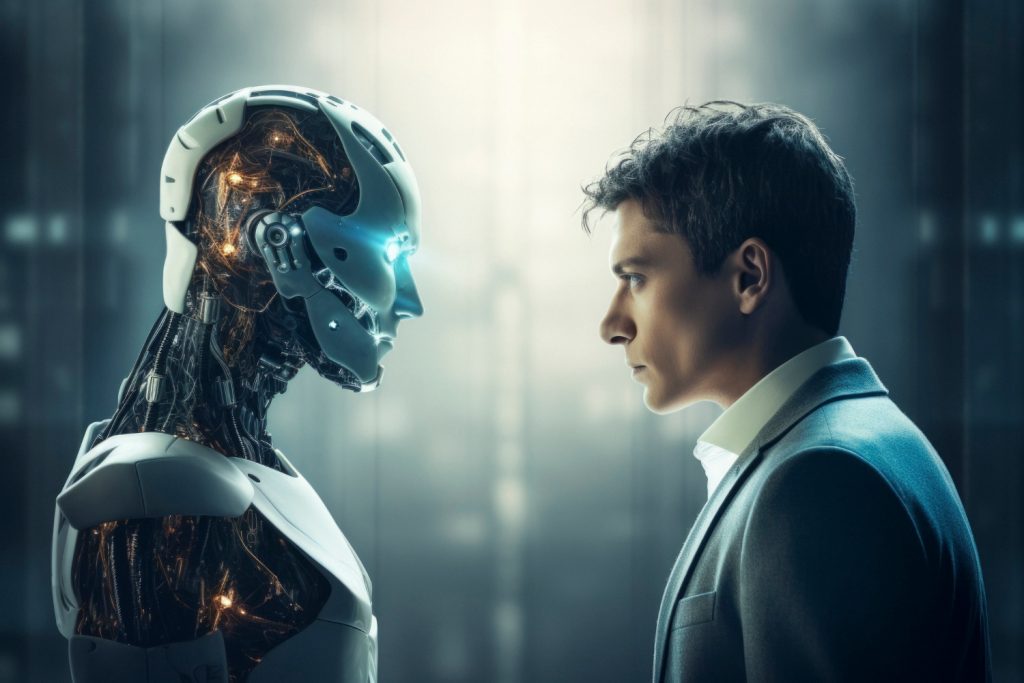
The debate of AI trading bots vs. human traders is not a question of who wins outright, but of which strengths dominate under specific conditions. AI bots excel in speed, discipline, data processing, and emotion-free execution. They thrive in stable, pattern-rich environments and short-term opportunities. Humans excel in context, intuition, macro analysis, and narrative understanding. They outperform AI during unpredictable market conditions and long-term strategy.
The future of trading is not a war between humans and machines—it is a partnership. The most profitable systems will fuse human intuition with AI precision, merging creativity with computation. In a world where markets evolve rapidly, the trader who wins is not the fastest or smartest alone, but the one who knows how to combine human strengths with machine intelligence.
In the end, AI will not replace human traders—but human traders who use AI will replace those who don’t.