

Introduction
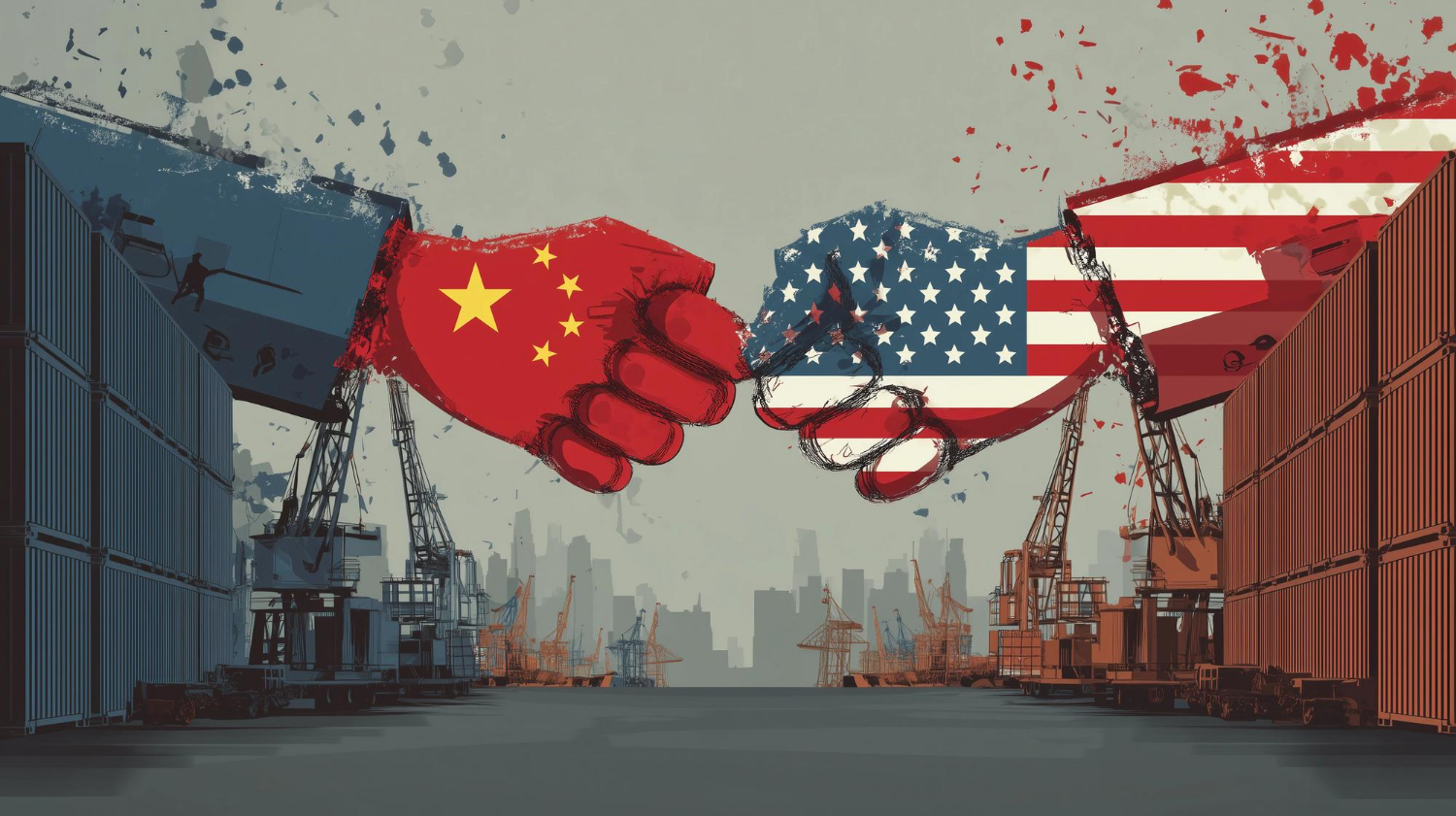
Over the past decade, the global trading system has entered a period of deep recalibration. The rise of China as a manufacturing, technological, and financial powerhouse has coincided with strategic anxieties among the United States and its allies about supply-chain dependence, national security, and economic resilience. While China remains a critical market and supplier for much of the world, the combination of geopolitical rivalry, trade disputes, sanctions regimes, and technological competition has pushed U.S. allies to rethink how they engage economically with Beijing. Rather than a clean break, what has emerged is a complex process of adjustment—one that balances risk reduction with economic pragmatism. This recalibration is reshaping trade flows, investment patterns, and diplomatic alignments across Asia, Europe, and beyond.
Strategic Drivers Behind the Recalibration
Several interlocking forces are driving U.S. allies to reassess their trade relations with China. First, geopolitical tensions between the United States and China have heightened concerns that economic interdependence could become a vulnerability during crises. Trade wars, technology restrictions, and debates over Taiwan and the South China Sea have underscored the risk that commerce can be weaponized.
Second, supply-chain disruptions—most notably during the COVID-19 pandemic—exposed the fragility of highly concentrated production networks. Many allies discovered that essential goods, from pharmaceuticals to semiconductors, were overwhelmingly sourced from China or Chinese-linked supply chains. This realization spurred policy shifts aimed at diversification rather than outright decoupling. Governments increasingly use the language of “de-risking,” emphasizing resilience and redundancy instead of severing ties.
Third, domestic political pressures matter. In countries such as Japan, Germany, and Australia, voters and industries alike have expressed concern over unfair trade practices, intellectual-property issues, and dependence on a single external partner. These concerns translate into industrial policies, export controls, and investment screening mechanisms aligned—sometimes loosely, sometimes tightly—with U.S. strategy.

Finally, technological competition has become central. Advanced sectors like semiconductors, artificial intelligence, clean energy, and telecommunications are now viewed as strategic assets. Allies worry that unrestricted trade and technology transfer could erode their competitive edge or enhance China’s military-civil fusion capabilities. This has led to selective restrictions and coordinated frameworks among like-minded economies.
How Key U.S. Allies Are Adjusting Trade Ties
The recalibration is not uniform; it varies by region and national interest. In East Asia, proximity to China makes disengagement unrealistic. Japan and South Korea remain deeply integrated with Chinese manufacturing networks. Yet both have quietly diversified. Japanese firms have shifted some production to Southeast Asia, while South Korean conglomerates have expanded investments in the United States and India. Trade volumes with China remain large, but their relative share is gradually declining.
Europe presents a different picture. The European Union has articulated a “de-risking” agenda that stops short of decoupling. Germany, Europe’s largest economy, continues to rely heavily on China as both a market and a supplier, particularly in automobiles and machinery. At the same time, Berlin has introduced stricter investment screening and encouraged companies to avoid excessive exposure. France and Italy, while less dependent, have also reassessed large-scale Chinese investments in infrastructure and technology.
In the Indo-Pacific, Australia offers a telling case. After experiencing trade coercion from Beijing in the early 2020s, Canberra accelerated efforts to diversify export markets for commodities like wine, barley, and coal. Although trade with China has partially rebounded, Australia’s policy stance now emphasizes resilience and strategic autonomy, reinforced through partnerships such as the Quad.
Elsewhere, countries like Canada and the United Kingdom have adopted a middle path—maintaining trade while tightening rules around sensitive sectors. These allies coordinate closely with Washington on export controls and technology standards but resist blanket restrictions that could harm domestic industries.
Economic and Diplomatic Consequences of De-Risking
The shift toward recalibration carries significant economic implications. Diversifying supply chains often raises costs in the short term, as firms replicate production capacity or relocate to higher-cost jurisdictions. Consumers may face higher prices, while companies absorb transition expenses. However, proponents argue that these costs are the price of greater stability and reduced exposure to geopolitical shocks.
Diplomatically, recalibration has introduced new complexities. Allies must manage a delicate balancing act: signaling alignment with U.S. strategic priorities without provoking retaliation from China. Beijing has responded with a mix of reassurance and warning—promoting its market openness while cautioning against exclusionary blocs. This dynamic forces allies to pursue nuanced diplomacy, emphasizing that their actions are about risk management, not containment.
At the same time, new trade corridors are emerging. Southeast Asia, India, and parts of Latin America are benefiting from investment flows as companies seek alternatives to China-centric production. This “China-plus-one” strategy reshapes regional development patterns and could, over time, reduce global reliance on a single manufacturing hub.
Yet the recalibration also risks fragmenting the global trading system. Divergent standards, export controls, and industrial subsidies can undermine multilateral institutions like the World Trade Organization. Allies recognize this risk, but many view it as unavoidable in an era where economics and security are increasingly intertwined.
Conclusion
U.S. allies are not abandoning trade with China, but they are clearly redefining its terms. The recalibration underway reflects a pragmatic response to a more contested global environment—one where efficiency alone no longer dictates economic policy. By diversifying supply chains, protecting strategic technologies, and coordinating selectively with Washington, allies seek to reduce vulnerabilities while preserving the benefits of engagement.
This process is uneven, costly, and politically sensitive, yet it is likely to deepen rather than reverse. As China remains central to global growth, complete decoupling is neither feasible nor desirable for most U.S. partners. Instead, the emerging model is one of managed interdependence: trading with China where interests align, hedging where risks are high, and embedding economic decisions within a broader strategic framework. How successfully allies navigate this balance will shape not only their own prosperity, but also the future architecture of the global trading system.