


Introduction
For decades, Automated Teller Machines (ATMs) have been one of the most visible and essential pillars of the global banking system. From their early introduction in the late 1960s to their widespread presence in cities, towns, airports, malls, and rural communities, ATMs revolutionized how people accessed money. They offered speed, convenience, round-the-clock availability, and reduced reliance on bank branches. However, as the world steadily moves toward digital payments, mobile banking, and contactless transactions, a serious question arises: what is the future of ATMs in a cashless world?
Today, digital wallets, Unified Payments Interface (UPI), QR-code payments, debit and credit cards, buy-now-pay-later platforms, and even cryptocurrencies are rapidly reshaping how people transact. In countries like India, Sweden, China, and South Korea, cash usage is declining at record speed. Younger generations often carry no cash at all, relying entirely on smartphones for their daily financial needs. Governments, fintech startups, and banks are actively encouraging this shift through incentives, convenience, and improved financial infrastructure.
Yet, despite this digital surge, ATMs have not disappeared. In fact, in many regions, banks are still upgrading and repositioning them. This creates an interesting paradox: why do ATMs still matter in an increasingly cashless world? Are they becoming obsolete, or are they evolving into a new form of financial service hub?
This article explores the future of ATMs through three major lenses: the changing role of ATMs, the technological transformation shaping them, and the economic and social relevance they continue to hold. Together, these factors help us understand why ATMs may not vanish as quickly as some predict—and how they could remain relevant in a cash-light, digitally driven economy.
The Evolving Role of ATMs in a Digital-First Economy
The traditional role of ATMs was simple and clear: allow customers to withdraw cash, check balances, and perform basic banking outside branch hours. Over time, they expanded to offer services such as fund transfers, bill payments, mini statements, mobile recharges, and card deposits. But in today’s digital-first economy, many of these functions are easily handled by mobile apps. This shift forces ATMs to redefine their core purpose.
From Cash Dispensers to Service Hubs
Modern ATMs are no longer limited to cash withdrawal. Many machines now allow customers to:
- Deposit cash and checks
- Apply for loans or credit cards
- Make utility and tax payments
- Update KYC details
- Print account statements
- Transfer funds domestically and internationally
In the future, ATMs are expected to evolve further into mini financial service centers. For people who still prefer physical interactions over mobile screens—especially senior citizens and rural users—ATMs may serve as an important bridge between traditional and digital banking.
Financial Inclusion and Accessibility
One of the strongest arguments for the continued existence of ATMs is financial inclusion. Large sections of the global population, particularly in rural or semi-urban areas, either lack smartphones, stable internet connections, or digital literacy. For them, ATMs remain the most practical point of access to modern banking.
In developing countries, governments rely heavily on ATMs to distribute pension payments, welfare schemes, subsidies, and disaster relief funds. A fully cashless system often overlooks the infrastructural limitations that millions of people still face. Thus, ATMs are likely to remain essential where digital adoption is uneven.
Trust and Psychological Comfort
Cash continues to offer a sense of control and security that digital money often fails to replicate for many users. During network outages, cyberattacks, banking system failures, or natural disasters, cash becomes an immediate lifeline. ATMs, in such moments, are not merely machines but essential financial safety nets.
Even in highly digitized societies, people prefer holding some physical cash for emergencies. This psychological need will ensure that ATMs continue to play a supportive role, even if their transaction volumes decline.
The Role of ATMs in a Hybrid Economy
Rather than disappearing, ATMs are increasingly becoming part of a hybrid financial ecosystem—a system where cash and digital payments coexist. While digital payments dominate everyday transactions, ATMs serve backup, special need, and transitional functions. In this model, ATMs do not compete with digital finance but complement it.
Technological Innovations Reshaping the Future of ATMs
The survival of ATMs in a cashless world depends largely on how well they adapt to new technologies. Traditional machines are being transformed into smart, connected, AI-enabled financial terminals that blend physical and digital banking.
Cardless and Contactless Transactions
One of the most significant innovations is cardless ATM access. Instead of inserting a debit card, users now authenticate themselves using:
- Mobile banking apps
- One-time passwords (OTP)
- QR codes
- Biometric verification
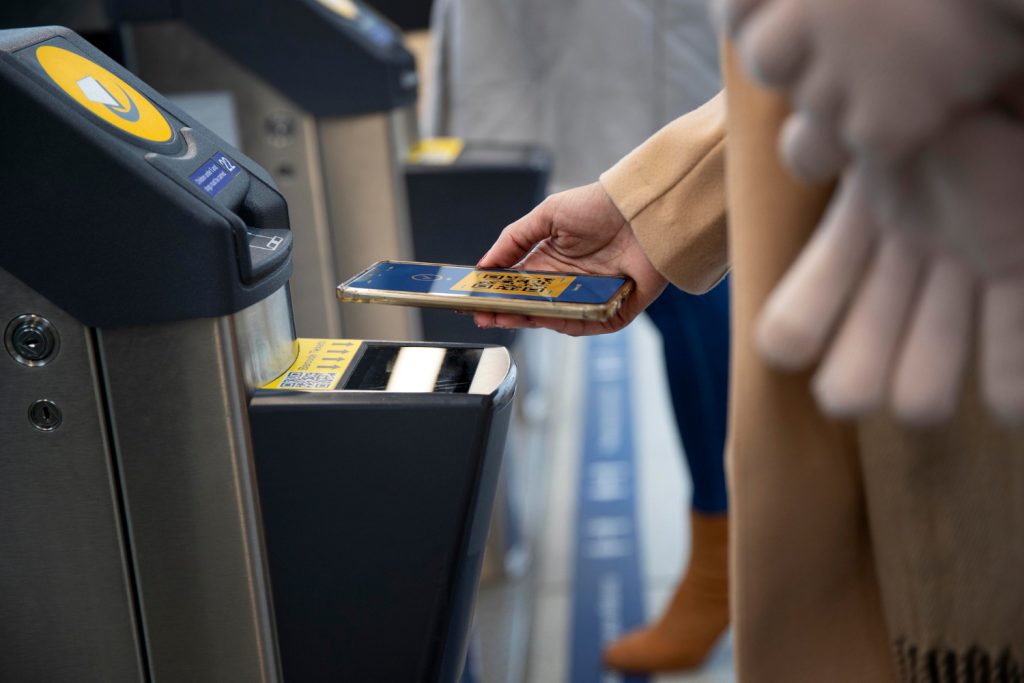
This reduces card skimming fraud, improves user convenience, and aligns ATMs with smartphone-based financial behavior. In many countries, users can now withdraw cash simply by scanning a QR code at the ATM using their mobile banking app.
Biometric Authentication and AI Security
Facial recognition, fingerprint scanning, iris verification, and voice recognition are increasingly integrated into ATM systems. These technologies enhance security while reducing dependence on physical cards and PINs. Artificial intelligence also helps detect suspicious behavior, analyze transaction patterns, and prevent fraud in real time.
Future ATMs may identify users the moment they approach the machine, customize the interface based on their transaction history, and flag potential fraud instantly.
Integration with Fintech and Digital Banking Platforms
Banks are now collaborating with fintech firms to transform ATMs into digital access points. Customers will be able to:
- Link digital wallets
- Convert cash into wallet balance instantly
- Make cryptocurrency-related transactions in supported regions
- Transfer funds across multiple platforms from one interface
This integration allows ATMs to remain relevant even for users who primarily operate in the digital economy.
Smart Cash Management and Predictive Analytics
AI-driven predictive systems now allow banks to monitor ATM usage in real time and predict when machines will run out of cash. This improves efficiency, reduces downtime, and cuts operational costs. Smart ATMs also help reduce energy consumption and maintenance requirements through self-diagnosing systems.
ATM as a Retail and Government Service Point
In the future, ATMs may expand beyond banking into public service delivery. They could be used for:
- Government document payments
- Ticket bookings
- Insurance services
- Tax payments
- Micro-investments and savings plans
In this sense, the ATM evolves from a banking tool into a community-based digital service terminal.
Economic, Social, and Strategic Importance of ATMs in the Long Term
While technology defines how ATMs evolve, economic and social forces determine whether they remain relevant at all. Several important factors suggest that ATMs will continue to play a meaningful role for decades, albeit in a reduced and transformed capacity.
Cost Efficiency for Banks
Maintaining physical bank branches is expensive. ATMs offer a far cheaper alternative for delivering essential services. In semi-urban and rural regions, one ATM can serve thousands of customers at a fraction of the cost of running a full branch. As banks focus on cost optimization, ATMs remain one of the most efficient touchpoints.
Employment and Ancillary Industries
ATM networks support a large ecosystem of jobs—cash management services, security agencies, maintenance engineers, technicians, logistics providers, and software vendors. A sudden elimination of ATMs would disrupt this entire employment chain. Gradual transformation ensures economic stability for these sectors.
Emergency Resilience and Disaster Management
During emergencies such as floods, earthquakes, power failures, or cyber disruptions, digital payment systems can temporarily fail. In such moments, cash becomes the most reliable medium of exchange. ATMs provide critical infrastructure for emergency liquidity. Governments often prioritize restoring ATM services during disasters before even reopening full bank branches.
Digital Divide and Generational Gaps
While urban youth adapt effortlessly to mobile payments, older generations often struggle with digital interfaces. For them, ATMs represent a familiar and trusted system. The speed of digital adoption varies significantly by age, education level, and geographic location. Until digital literacy becomes universal, ATMs will remain socially necessary.
Cultural Attachment to Cash
In many countries, cash is more than just a payment method—it is embedded in cultural habits, gift exchanges, daily markets, informal businesses, and religious donations. This cultural dependence slows down the complete disappearance of cash and, by extension, ATMs.
Strategic Importance for Monetary Policy
Governments and central banks carefully monitor cash circulation as a key economic indicator. ATMs serve as controlled distribution points that help regulators track and manage money flow. Even in a near-cashless future, limited physical currency will still require secure infrastructure—an infrastructure that ATMs already provide.
Conclusion
The idea of a completely cashless world is powerful, efficient, and technologically appealing. Digital payments are faster, more transparent, and cheaper to manage at scale. For governments, they reduce black money and corruption. For banks, they reduce operating costs. For consumers, they offer unmatched convenience. Yet, despite all these advantages, the future of ATMs is not extinction—it is transformation.
ATMs are evolving from simple cash dispensers into advanced, intelligent financial service points. They are integrating biometrics, AI, mobile connectivity, fintech platforms, and government services into one physical interface. Their role is shifting from being the primary cash access channel to becoming a versatile bridge between physical and digital finance.
Economically and socially, ATMs continue to serve populations that digital systems struggle to reach—rural communities, elderly users, low-income groups, and regions with weak connectivity. Strategically, they provide resilience during emergencies, support financial inclusion, and offer a trusted financial access point outside traditional branches.
In the long term, the number of ATMs may decline in highly digitized cities, but their importance will deepen in targeted regions and specialized use cases. The ATM of the future may not look like the machine we know today—it will be smarter, smaller, more secure, and more multifunctional. Rather than disappearing in a cashless world, ATMs are set to become quiet but powerful enablers of the next phase of financial evolution.