

Introduction
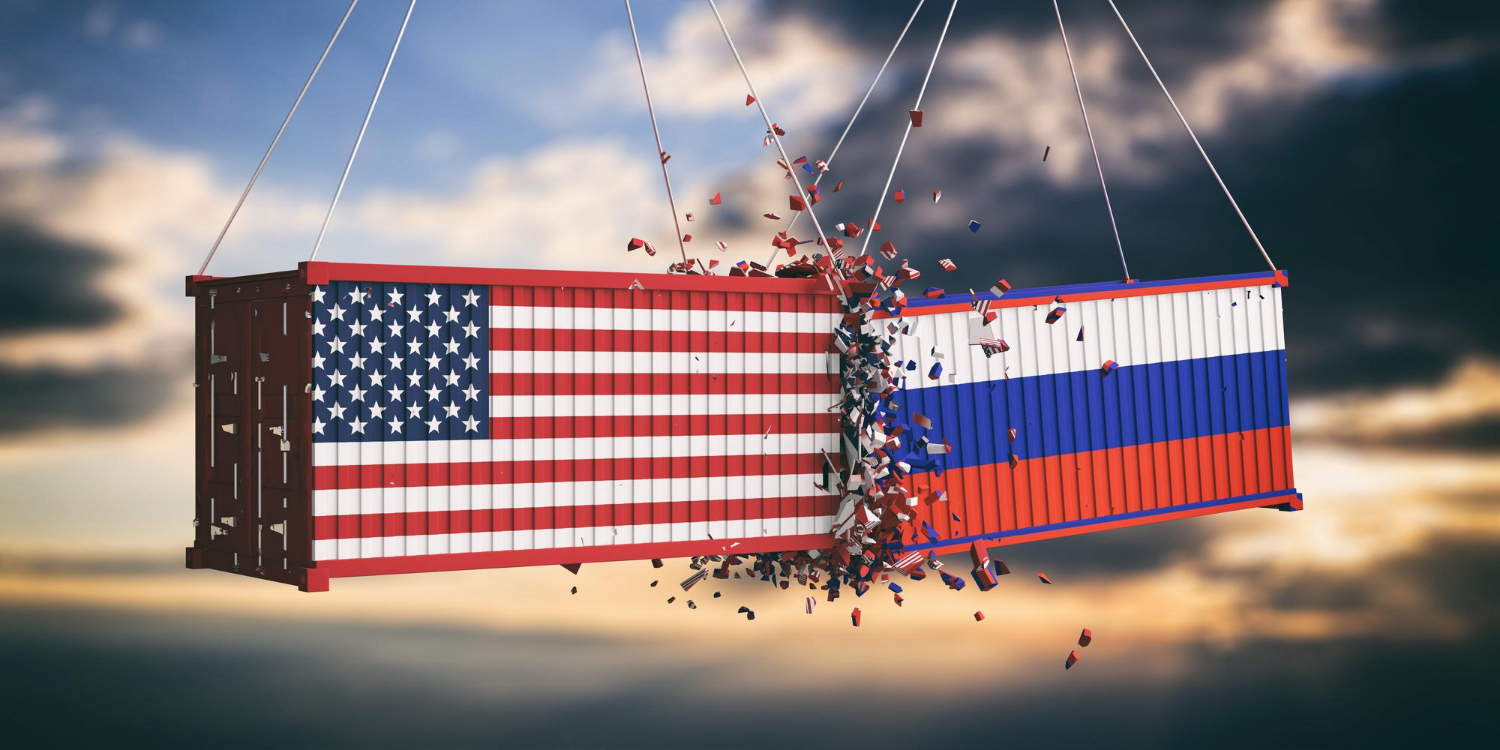
The escalation of tariffs between the United States and Russia marks a significant intensification of economic confrontation at a time when the global trading system is already under immense pressure. What began as targeted trade restrictions rooted in geopolitical rivalry has evolved into a broader contest involving industrial policy, sanctions, counter-sanctions, and strategic decoupling. Although direct trade volumes between the two countries are smaller than those seen in U.S.–China or EU–Russia commerce, the symbolic and systemic implications of this tariff escalation are substantial. It reinforces fragmentation in global markets, undermines confidence in multilateral trade rules, and adds volatility to supply chains that are still recovering from pandemic disruptions and regional conflicts. This essay examines the drivers, mechanisms, and consequences of the deepening tariff escalation between the United States and Russia, situating it within the broader context of global trade strains.
Historical and Geopolitical Roots of the Tariff Escalation
The current tariff escalation cannot be understood in isolation from the broader deterioration in relations between the United States and the Russia. Since the end of the Cold War, economic engagement was often viewed as a stabilizing force capable of moderating political tensions. However, this assumption has steadily eroded over the past decade. Disagreements over security architecture, election interference allegations, regional conflicts, and competing visions of global order have transformed economic tools into instruments of strategic pressure.
Tariffs, in this context, are not merely commercial measures but extensions of foreign policy. The United States has increasingly linked trade policy to national security considerations, invoking domestic legal frameworks that allow the imposition of duties on grounds beyond traditional trade remedies. Russia, facing both sanctions and restricted market access, has responded by erecting its own tariff and non-tariff barriers, often framed as necessary to protect domestic industries and ensure economic sovereignty.
The escalation has been gradual but cumulative. Initial measures targeted specific sectors, such as metals, energy-related products, and dual-use technologies. Over time, the scope widened to include agricultural goods, machinery, and consumer products. Each round of tariffs has been justified domestically as proportionate and defensive, yet internationally it has been perceived as another step toward economic decoupling. This history underscores that the tariff escalation is less about correcting trade imbalances and more about redefining the boundaries of economic engagement amid strategic rivalry.
Mechanics of Tariffs, Sanctions, and Countermeasures
The tariff escalation between the two countries is deeply intertwined with sanctions regimes and regulatory restrictions. Unlike conventional trade disputes where tariffs are negotiated or litigated within established frameworks, this confrontation operates across multiple legal and political layers. Tariffs are imposed alongside export controls, financial restrictions, and investment bans, creating a dense web of barriers that collectively amplify economic pressure.
From the U.S. perspective, tariffs have been used to limit Russia’s access to advanced technologies and to reduce dependency on Russian inputs in sensitive sectors. These measures are often complemented by licensing requirements and compliance rules that increase transaction costs even where tariffs alone might be modest. Russia’s countermeasures, in turn, have combined retaliatory tariffs with import substitution policies, public procurement preferences, and selective bans on foreign goods.
This interaction produces nonlinear effects. A tariff on a single input can cascade through production networks, affecting downstream industries far beyond the original target. When combined with sanctions, the result is a chilling effect on trade that exceeds the nominal tariff rates. Firms, wary of legal and reputational risks, may withdraw entirely from bilateral trade, accelerating decoupling beyond what policymakers explicitly mandate.
Moreover, the lack of clear off-ramps differentiates this escalation from past trade disputes. Traditional mechanisms for de-escalation, such as negotiated tariff reductions or dispute settlement rulings, are weakened when measures are justified on national security grounds. As a result, tariffs become semi-permanent features of the trade landscape rather than bargaining chips, embedding confrontation into the structure of global commerce.
Economic Impact on Bilateral Trade and Domestic Industries
Although bilateral trade between the United States and Russia represents a relatively small share of each country’s total trade, the economic impact of tariff escalation is far from negligible. Certain sectors are disproportionately exposed, and the effects ripple through domestic economies in uneven ways. In the United States, industries reliant on specific Russian inputs—such as certain metals, fertilizers, and energy-related materials—have faced higher costs and supply uncertainty. While alternative suppliers exist, substitution is neither immediate nor costless, leading to short-term price pressures and production bottlenecks.
In Russia, the impact has been more structural. Tariffs and restricted access to U.S. markets have reinforced the state’s emphasis on self-sufficiency and industrial policy. Domestic producers in protected sectors may benefit from reduced foreign competition, but this protection often comes at the expense of efficiency and innovation. Over time, higher input costs and limited access to advanced technologies can erode competitiveness, particularly in industries integrated into global value chains.
Consumers in both countries also bear indirect costs. Tariffs raise prices, reduce choice, and can exacerbate inflationary pressures. While governments may seek to cushion these effects through subsidies or fiscal measures, such interventions carry their own economic distortions. The distributional consequences are politically salient: concentrated benefits to protected industries contrast with diffuse costs borne by households and small businesses.
Importantly, the bilateral economic impact extends beyond measurable trade flows. The uncertainty generated by tariff escalation discourages long-term investment and planning. Firms may delay or cancel projects, reconfigure supply chains, or exit markets altogether. These behavioral responses magnify the economic cost of tariffs, making their true impact larger and more persistent than headline figures suggest.
Spillover Effects on Global Supply Chains and Trade Governance
The tariff escalation between the United States and Russia contributes to broader fragmentation in global trade. Supply chains, already strained by pandemic disruptions and geopolitical shocks, face additional complexity as firms navigate an increasingly politicized trade environment. Even companies with no direct exposure to U.S.–Russia trade are affected through price volatility, rerouted logistics, and compliance burdens.
One significant spillover is the acceleration of regionalization. Firms seek to “friend-shore” or “near-shore” production to jurisdictions perceived as politically aligned or stable. While this can enhance resilience for individual companies, it reduces the efficiency gains historically associated with globalized production. The result is a trade-off between security and efficiency that reshapes comparative advantage and alters patterns of specialization.
At the institutional level, the escalation underscores the weakening of multilateral trade governance. The World Trade Organization was designed to manage disputes and constrain unilateral trade actions, but its capacity is limited when members invoke national security exceptions or bypass dispute settlement altogether. The normalization of such practices risks eroding the predictability and rules-based nature of the global trading system.
Other countries are watching closely. For emerging and middle-income economies, the lesson may be that trade openness is contingent and that economic interdependence can become a vulnerability. This perception could encourage more defensive trade policies worldwide, further straining an already fragile system. Thus, the U.S.–Russia tariff escalation functions as both a symptom and a catalyst of wider global trade tensions.
Strategic and Political Implications for the Global Economy
Beyond immediate economic effects, the tariff escalation carries profound strategic implications. It reinforces the idea that economic policy is inseparable from geopolitical competition, blurring the line between trade and security. This convergence reshapes alliances, as countries align not only militarily but also economically, coordinating tariffs, sanctions, and industrial policies.
For the United States, the use of tariffs against Russia signals a willingness to incur economic costs in pursuit of strategic objectives. It also sets precedents that may be applied elsewhere, influencing how other rivalries are managed. For Russia, enduring tariffs and restricted access to Western markets accelerate its pivot toward alternative partners and regional blocs, reshaping trade routes and financial arrangements.
The global economy, in turn, becomes more segmented. Competing standards, parallel financial systems, and fragmented supply chains reduce the integrative forces that once underpinned globalization. While some degree of diversification may enhance resilience, excessive fragmentation risks lower growth, reduced innovation, and heightened volatility.
Politically, tariff escalation can entrench adversarial narratives. Economic measures framed as defensive or punitive are easily incorporated into domestic discourse, reinforcing public perceptions of external threat. This dynamic makes compromise more difficult, as leaders face domestic constraints that discourage de-escalation. Consequently, tariffs become not just economic instruments but symbols of national resolve, further embedding confrontation into international relations.
Conclusion
The deepening tariff escalation between the United States and Russia illustrates how trade policy has become a central arena of geopolitical competition. Rooted in long-standing political tensions, the use of tariffs alongside sanctions and regulatory barriers has transformed bilateral economic relations and contributed to wider global trade strains. While the direct trade volumes involved may be limited, the broader consequences—ranging from supply-chain disruption and higher costs to institutional erosion and strategic fragmentation—are substantial.
This escalation highlights the diminishing capacity of traditional trade frameworks to manage conflict in an era where national security concerns dominate economic decision-making. As tariffs harden into semi-permanent features of the trade landscape, the prospects for rapid normalization recede. For the global economy, the challenge lies in balancing legitimate security concerns with the need to preserve an open, predictable, and rules-based trading system. Without such balance, tariff escalation risks becoming a self-reinforcing cycle, deepening divisions and constraining growth in an already uncertain world.