


Introduction
Recessions are an inevitable part of the economic cycle—periods when economic activity contracts, businesses slow down, and unemployment rises. While economic growth is often celebrated, recessions remind us of the cyclical and sometimes fragile nature of economies. Governments, central banks, investors, and businesses constantly seek ways to anticipate downturns to mitigate their impact. Predicting recessions is not a perfect science, but economic indicators provide powerful tools for spotting warning signs before a full-blown contraction occurs.
These indicators—ranging from GDP trends and unemployment data to consumer confidence surveys and yield curve movements—act like a dashboard for the economy. Just as a pilot uses multiple gauges to navigate safely through turbulence, economists use a blend of leading, lagging, and coincident indicators to understand where the economy is heading.
In this article, we will explore how recessions can be predicted using economic indicators. We’ll examine the different types of indicators, the most reliable predictors historically, and the challenges in interpreting them accurately. Understanding these tools not only helps economists and policymakers prepare for downturns but also empowers investors and ordinary citizens to make informed financial decisions.
Understanding Economic Indicators: The Building Blocks of Recession Prediction
Economic indicators are statistical measures that reflect the current or future state of an economy. They are derived from data collected by governments, financial institutions, and research organizations, providing a quantitative basis for economic analysis. To predict recessions effectively, it’s essential to understand how these indicators work and the role they play in signaling turning points in economic activity.
Types of Economic Indicators
Economic indicators are generally categorized into three groups—leading, lagging, and coincident indicators—each serving a different purpose in understanding the economic cycle.
- Leading Indicators
These indicators change before the economy as a whole begins to follow a particular trend. They act as early warning signals. Examples include:- Yield curve (the spread between long-term and short-term interest rates)
- Stock market performance
- Building permits
- New orders for capital goods
- Consumer confidence index
- Lagging Indicators
These indicators change after the economy has already begun to follow a trend. They confirm what’s already happening. Common lagging indicators include:- Unemployment rate
- Corporate profits
- Consumer debt levels
- Interest rate changes
- Coincident Indicators
Coincident indicators move in real-time with the economy, reflecting its current state. They are used to measure the strength or weakness of ongoing economic activity. Examples include:- Gross Domestic Product (GDP)
- Industrial production
- Personal income
- Employment figures
Composite Indexes
To make interpretation easier, organizations like The Conference Board create composite indexes such as the Leading Economic Index (LEI), which combines multiple leading indicators into one measure. When the LEI consistently declines over several months, it often foreshadows an upcoming recession. Similarly, composite indexes of coincident and lagging indicators help track and confirm cyclical patterns.
Why Economic Indicators Matter
Economic indicators are essential for policymakers and market participants because they:
- Help central banks adjust monetary policy to maintain stability.
- Enable businesses to make informed investment and hiring decisions.
- Guide investors in portfolio allocation.
- Assist governments in planning fiscal interventions.
Without economic indicators, decision-making would rely heavily on intuition or outdated information. Indicators thus serve as a crucial navigational tool in the complex and dynamic world of macroeconomics.
Key Economic Indicators That Predict Recessions
Not all economic indicators are equally reliable when it comes to forecasting recessions. Some have consistently shown predictive power across decades and economic environments, while others may give false signals or require contextual understanding. Below are some of the most important indicators economists and analysts monitor closely to anticipate recessions.
1. The Yield Curve
The yield curve represents the relationship between interest rates on short-term and long-term government bonds. In a healthy economy, long-term rates are typically higher than short-term ones, compensating investors for the risks of lending money for a longer period. However, when the curve inverts—meaning short-term rates exceed long-term rates—it signals that investors expect weaker economic growth or even a contraction in the near future.
Historically, the inverted yield curve has been one of the most accurate predictors of U.S. recessions. According to data from the Federal Reserve, every recession since the 1950s was preceded by an inversion, usually within 6 to 24 months before the downturn began. The mechanism behind this lies in monetary policy and investor sentiment: when central banks raise short-term rates to combat inflation, borrowing becomes costlier, slowing growth. Simultaneously, long-term yields fall as investors flock to safer, longer-term assets anticipating weaker demand.
2. Unemployment and Jobless Claims
The labor market is another crucial area to monitor. While unemployment is a lagging indicator, initial jobless claims and changes in employment growth often act as early warnings. When companies start cutting back on hiring or laying off workers, it reflects reduced confidence in future demand.
A sudden and sustained rise in jobless claims typically signals weakening business conditions. During the 2008 financial crisis, unemployment surged dramatically following early spikes in claims data months before the official recession declaration. Similarly, declines in average weekly hours worked often indicate that employers are adjusting labor utilization in anticipation of slower sales.
3. Consumer Confidence and Spending
Since consumer spending accounts for roughly two-thirds of GDP in most developed economies, the sentiment of households plays a vital role in determining economic direction. Consumer confidence surveys, such as the University of Michigan Consumer Sentiment Index or The Conference Board’s Consumer Confidence Index, measure how optimistic or pessimistic consumers feel about their financial prospects and the broader economy.
A sharp drop in consumer confidence often precedes a slowdown in spending, leading to lower demand for goods and services. For instance, prior to the 2020 COVID-19 recession, consumer sentiment plunged amid health and job security fears, reflecting an immediate contraction in spending patterns.
4. Business Investment and Industrial Production
Business investment in equipment, infrastructure, and research serves as a forward-looking indicator of economic activity. Companies typically invest when they foresee growth and cut back when they expect demand to decline. A decline in new orders for durable goods or capital equipment can thus signal an impending downturn. Similarly, drops in industrial production—which tracks output in manufacturing, mining, and utilities—often align with the early stages of a recession.
5. Stock Market Performance
Stock markets are considered leading indicators because they reflect investors’ expectations about future corporate earnings and economic conditions. Prolonged and widespread declines in equity prices often indicate reduced confidence in growth prospects. However, market volatility can also reflect short-term shocks unrelated to economic fundamentals, so analysts typically combine stock trends with other indicators for a clearer signal.
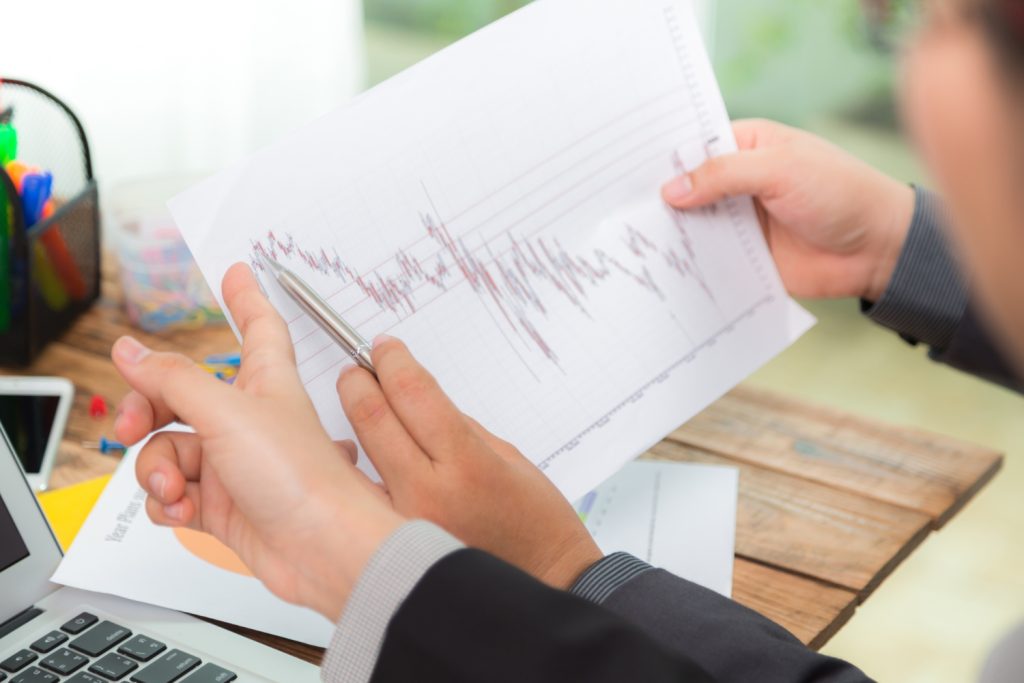
For example, during the early 2000s dot-com bubble burst, equity markets began falling months before the official recession began. The same was true in late 2007, when stock indices began declining well ahead of the 2008 recession.
6. Housing Market Trends
The housing sector is highly sensitive to interest rates and consumer confidence. Indicators such as housing starts, building permits, and home sales provide valuable insight into future economic momentum. A sharp decline in construction activity often suggests tightening financial conditions and reduced demand. The 2008 Great Recession, for example, was preceded by an extended housing market collapse that sent shockwaves through global financial systems.
7. Money Supply and Credit Conditions
Monetary aggregates like M2 money supply and credit growth offer clues about liquidity in the economy. When credit becomes scarce or expensive—often due to tighter monetary policy—spending and investment slow down. Monitoring bank lending standards and loan delinquency rates helps identify stress points that could trigger broader economic weakness.
8. Global Economic Indicators
In an interconnected world, global factors also influence recession risk. A slowdown in major economies such as China, the Eurozone, or the United States can spill over through trade and financial channels. Indicators like global manufacturing PMIs (Purchasing Managers’ Index) and commodity price trends (especially oil and metals) often provide early signs of worldwide economic cooling.
Challenges and Limitations in Predicting Recessions
While economic indicators are invaluable, predicting recessions remains one of the most difficult tasks in economics. Even the most sophisticated models can fail to foresee turning points or may signal false alarms. Understanding the limitations of these tools is as important as knowing how to use them.
1. Lag in Data and Revisions
Many economic indicators are released with a delay and are often revised later. For example, GDP figures are initially estimates that can change substantially as more data becomes available. By the time a recession is officially recognized, it may already be halfway through. This lag makes real-time decision-making challenging.
2. False Positives and Noise
Indicators can sometimes flash warnings that never materialize into recessions. The yield curve inverted in 1966 and again in 1998 without leading to significant downturns. Similarly, short-term dips in consumer confidence or stock markets may reflect temporary events like political uncertainty or natural disasters rather than fundamental weaknesses. Analysts must distinguish between noise and meaningful signals.
3. Structural Changes in the Economy
Economies evolve over time. The rise of digital industries, globalization, and new financial products can change how traditional indicators behave. For instance, the labor market today is influenced by gig work, automation, and flexible employment models that differ from historical patterns. Relying solely on past correlations may therefore be misleading.
4. Policy Interventions
Modern economies are heavily influenced by government and central bank actions. Stimulus packages, interest rate adjustments, and quantitative easing can temporarily distort market signals. For example, aggressive monetary easing after 2008 and during the COVID-19 pandemic altered the relationship between interest rates and growth, making traditional yield-curve interpretations less straightforward.
5. Psychological and Behavioral Factors
Economics is not purely mechanical—it’s also psychological. Fear, optimism, herd behavior, and risk perception all influence spending, investment, and financial markets. These factors are difficult to quantify and can amplify or delay recessionary trends. For instance, if consumers believe a recession is coming, they might cut spending prematurely, effectively accelerating the downturn.
6. Global Interdependence and External Shocks
Globalization means recessions can now be triggered by external factors beyond domestic control—such as geopolitical conflicts, pandemics, or supply chain disruptions. These events often defy traditional economic forecasting models. The 2020 recession, sparked by the COVID-19 pandemic, was a stark example: it arose abruptly despite strong preceding indicators of growth.
7. Overreliance on Models
Economic forecasting models, while useful, are only as good as the data and assumptions they rely on. Complex algorithms and econometric tools can give a false sense of precision. The 2008 crisis exposed how overconfidence in financial models and rating systems contributed to systemic failure. Effective prediction thus requires both quantitative analysis and qualitative judgment.
Conclusion
Predicting recessions using economic indicators is a blend of science, experience, and interpretation. While no single indicator can perfectly forecast downturns, a combination of reliable data points—such as the yield curve, employment trends, consumer sentiment, and industrial activity—can provide strong clues about where the economy is heading.
The true power of these indicators lies not in their precision but in their ability to inform proactive decision-making. Policymakers can implement preemptive measures, businesses can adjust strategies, and investors can safeguard portfolios before conditions worsen. However, it’s equally important to recognize the limitations—data lags, false signals, and external shocks can all complicate the picture.
In an increasingly interconnected and fast-changing world, predicting recessions will always involve uncertainty. Yet, by maintaining a balanced understanding of economic indicators and the context in which they operate, societies can move closer to the ultimate goal: not eliminating recessions entirely, but mitigating their impact and fostering long-term economic resilience.