

Introduction
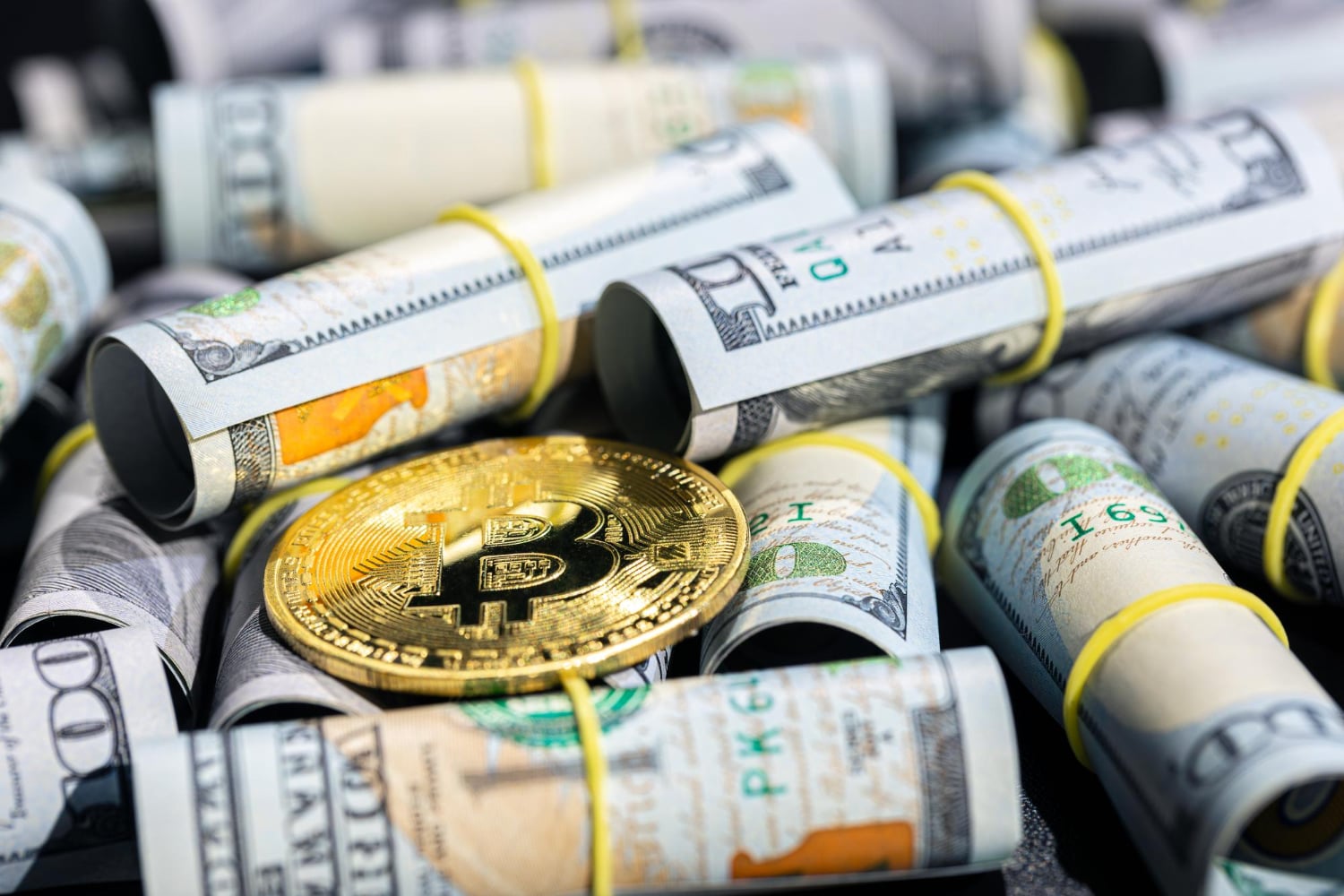
For decades, the United States dollar (USD) has been the undisputed linchpin of the global financial system. Its role as the world’s primary reserve currency has not only given the United States immense economic influence but also geopolitical leverage over nations that rely on dollar-denominated trade and debt. However, the 21st century has seen a noticeable shift: many countries, both developed and developing, are seeking ways to reduce their reliance on the dollar. This phenomenon—commonly referred to as de-dollarization—has been driven by a variety of factors, from the United States’ expansive monetary policies and rising debt levels to sanctions regimes that weaponize the dollar against rival states. Against this backdrop, Bitcoin has emerged as a potential alternative. Though still relatively young, volatile, and controversial, Bitcoin represents a digital, decentralized, and borderless form of money that challenges the dominance of traditional fiat currencies.
This essay will explore Bitcoin’s role in the de-dollarization movement, organized into three broad themes: the forces behind de-dollarization, Bitcoin as a technological and monetary alternative, and the real-world geopolitical and economic implications of using Bitcoin in place of the dollar. While Bitcoin is not yet at the stage of replacing the dollar outright, its growing adoption highlights a shift in thinking about monetary sovereignty and global financial order.
Forces Driving De-Dollarization
To understand Bitcoin’s potential role, one must first examine why de-dollarization is occurring in the first place. The global reliance on the dollar was not always inevitable; it was the product of specific historical events, particularly the Bretton Woods system established in 1944. Under this arrangement, the dollar became the world’s central reserve currency, pegged to gold, while other currencies were pegged to the dollar. Even after the gold standard collapsed in 1971, the dollar retained its dominance due to the size of the U.S. economy, its political stability, and the establishment of the “petrodollar” system, which required oil purchases to be settled in dollars.
However, cracks in the system have been growing over the past few decades. The first major factor is monetary policy and inflationary concerns. Since the 2008 financial crisis, the United States Federal Reserve has engaged in unprecedented levels of quantitative easing and low interest rates, leading to concerns that the dollar’s value is being eroded. For countries holding trillions in U.S. dollar reserves, such inflationary policies threaten to reduce the purchasing power of their holdings. Similarly, America’s rising national debt, now in the tens of trillions, raises questions about the long-term sustainability of the dollar as a store of value.
The second factor is geopolitical weaponization of the dollar. The U.S. has frequently used its control over the global financial system to impose sanctions on rival states such as Iran, Russia, and Venezuela. Because most international transactions are cleared through the SWIFT network and dollar-based systems, sanctioned countries can effectively be cut off from the global economy. While sanctions are a powerful geopolitical tool for the U.S., they have simultaneously motivated targeted nations—and even their allies—to seek alternatives. The rise of bilateral trade agreements in non-dollar currencies, such as China and Russia using yuan-ruble settlements, is a direct response to this issue.
The third driver is the rise of competing economies. China, now the world’s second-largest economy, has been pushing for greater international use of the yuan. Regional powers such as India and Brazil are also exploring mechanisms for trade settlement in their local currencies. These moves, though still limited in scale, signify a broader interest in diversifying away from dollar dominance.
In this environment, Bitcoin enters the conversation not simply as another currency, but as a radically different alternative: a decentralized, algorithmically scarce, and censorship-resistant form of money that is not tied to the policies of any one government. While gold has historically served as a hedge against dollar decline, Bitcoin offers unique attributes suited for the digital age, making it increasingly relevant in discussions of de-dollarization.
Bitcoin as a Technological and Monetary Alternative
Bitcoin’s design is fundamentally different from both the dollar and traditional fiat currencies. Created in 2009 by the pseudonymous figure Satoshi Nakamoto, Bitcoin is based on blockchain technology, which records transactions in a decentralized, immutable ledger. No central bank, government, or institution controls Bitcoin; instead, its issuance and verification are governed by mathematical algorithms and distributed consensus among its network of participants. This architecture confers several characteristics that make Bitcoin an appealing tool in the context of de-dollarization.
1. Scarcity and Store of Value Potential
Unlike the dollar, which can be printed in virtually unlimited quantities by the Federal Reserve, Bitcoin has a fixed supply of 21 million coins. This programmed scarcity is often compared to gold, which has historically been used as a hedge against inflation and fiat debasement. For countries wary of holding dollar reserves that may lose value due to U.S. monetary expansion, Bitcoin presents a potential hedge that cannot be inflated away by political decision-making. In this sense, Bitcoin can play a role similar to gold in reserve portfolios, offering diversification and protection against dollar risk.
2. Decentralization and Censorship Resistance
Bitcoin transactions are peer-to-peer and do not require intermediaries such as banks or clearinghouses. This means they are resistant to censorship or control by any single government. For sanctioned countries that face restrictions on accessing global payment networks, Bitcoin provides an alternative means of conducting transactions outside the purview of U.S. authorities. While using Bitcoin at scale presents logistical and legal challenges, its existence demonstrates that financial sovereignty is possible without reliance on the dollar-dominated system.
3. Borderless and Digital Nature
Unlike gold, which is physical and cumbersome to move across borders, Bitcoin exists entirely in digital form. This makes it much easier to transfer internationally, often in a matter of minutes, without the need for traditional banking infrastructure. As global trade becomes increasingly digital, Bitcoin’s borderless nature aligns with the demands of a more interconnected economy.
For developing nations with limited access to banking systems, Bitcoin can also serve as a parallel financial infrastructure.
4. Transparency and Trust Through Code
One of Bitcoin’s underrated attributes is the transparency of its monetary policy. The supply schedule, block rewards, and halving events are all pre-programmed and publicly verifiable. Unlike fiat systems, where central banks can make abrupt policy changes, Bitcoin’s rules are consistent and predictable. This transparency can instill greater confidence among nations or institutions seeking to reduce their exposure to the opaque decision-making of U.S. monetary authorities.
5. Challenges to Adoption
Of course, Bitcoin is not without its flaws. Its price volatility remains a major barrier to its use as a stable reserve asset. Additionally, its transaction throughput is limited compared to global payment networks like Visa, making it less practical for high-volume trade settlements. Moreover, many governments are cautious about Bitcoin because its decentralized nature threatens their control over domestic monetary systems. These challenges suggest that Bitcoin may not fully replace the dollar, but rather complement other de-dollarization strategies, such as greater reliance on local currencies or central bank digital currencies (CBDCs).
Nevertheless, Bitcoin’s core features—scarcity, decentralization, and borderless accessibility—make it a unique monetary instrument in the broader trend of de-dollarization. It represents not just a currency, but a paradigm shift in how money can be designed and used globally.
Geopolitical and Economic Implications of Bitcoin in De-Dollarization
If Bitcoin continues to gain traction in the de-dollarization movement, the geopolitical and economic consequences could be profound. Its adoption would not only weaken the dollar’s dominance but also reshape how nations exercise financial power.
1. Impact on U.S. Hegemony
The dominance of the dollar has long been a cornerstone of U.S. geopolitical influence. It allows the U.S. to finance its deficits cheaply, exert control through sanctions, and maintain global demand for its treasury bonds. If Bitcoin were to replace or significantly reduce the dollar’s role in international trade, this would undermine one of America’s most powerful tools of statecraft. Countries could bypass U.S. financial institutions, making sanctions less effective and reducing Washington’s leverage over adversaries.
2. Opportunities for Smaller and Developing Nations
Bitcoin could level the playing field for smaller nations that lack strong national currencies. For example, El Salvador’s adoption of Bitcoin as legal tender in 2021 was a bold experiment in financial sovereignty. By using Bitcoin, the country sought to reduce reliance on the dollar and expand access to financial services for its unbanked population. If successful, such models could inspire other nations facing similar constraints. In regions like Africa, where cross-border payments are expensive and financial infrastructure is weak, Bitcoin offers an alternative that bypasses both the dollar and inefficient local systems.
3. Alternative to Central Bank Digital Currencies (CBDCs)
Many nations are exploring the development of CBDCs as part of their de-dollarization efforts. China’s digital yuan, for instance, is already being tested for cross-border transactions. While CBDCs remain under government control, Bitcoin represents a more radical alternative—one that eliminates central control altogether. The coexistence of Bitcoin and CBDCs could create a multipolar financial order where the dollar is only one of many options, rather than the default.
4. Risks of Regulatory Pushback and Surveillance
The growing adoption of Bitcoin will almost certainly provoke resistance from powerful governments. The U.S., European Union, and other financial hubs are already implementing stricter regulations around cryptocurrency use, citing concerns about money laundering, tax evasion, and financial stability. If Bitcoin is perceived as a direct threat to dollar dominance, these regulatory pressures could intensify, limiting its integration into the global financial system. However, given Bitcoin’s decentralized nature, outright suppression may prove impossible, though it could slow adoption.
5. The Future of Reserve Assets
If Bitcoin becomes a significant component of global reserves, it will fundamentally change how nations manage wealth. Diversifying reserves into Bitcoin would reduce reliance on dollar-denominated assets like U.S. Treasury bonds, potentially raising U.S. borrowing costs and altering global capital flows. Such a shift would also create a new financial dynamic, where trust in mathematics and decentralized networks replaces trust in U.S. institutions.
In sum, Bitcoin’s integration into de-dollarization strategies could reshape the balance of power in international finance. While its adoption may be uneven and gradual, even partial substitution of dollar reliance with Bitcoin could mark a historic shift toward a multipolar monetary system.
Conclusion
The de-dollarization movement reflects a growing desire among nations to achieve financial sovereignty and reduce exposure to the risks of U.S. monetary and geopolitical dominance. While many factors—such as inflation, debt, sanctions, and the rise of rival economies—drive this trend, Bitcoin has introduced a novel element into the debate. Unlike traditional alternatives such as gold or regional currencies, Bitcoin offers a decentralized, scarce, and borderless form of money that challenges the very foundations of fiat-based finance.
Bitcoin’s potential role in de-dollarization lies not in outright replacement of the dollar but in diversification. By offering an alternative that is resistant to censorship and inflation, Bitcoin gives nations and individuals a new tool to assert autonomy within the global financial system. The geopolitical implications are vast: reduced U.S. hegemony, new opportunities for smaller economies, and the possibility of a more multipolar financial order.
Yet Bitcoin’s challenges—volatility, scalability, and regulatory resistance—mean its role will likely remain complementary rather than dominant, at least in the near term. Nevertheless, its very existence has already shifted the conversation about money, sovereignty, and power. In the long run, whether Bitcoin becomes a cornerstone of global reserves or simply a parallel system, it has already made its mark on the de-dollarization movement by proving that alternatives to dollar dominance are both possible and practical.