


Introduction
Banking in the United States continues to evolve as financial institutions adopt technologies that make everyday transactions faster, safer, and more convenient. One of the most significant developments in recent years is the rapid expansion of cardless ATM withdrawals. America’s largest banks are investing heavily in digital banking infrastructure, allowing customers to withdraw cash without carrying a physical debit card. Instead, customers can use their smartphones, banking applications, QR codes, NFC (Near Field Communication), or one-time verification codes to access cash securely.
This transformation reflects changing consumer behavior. Millions of Americans now rely on mobile banking applications for checking balances, transferring money, paying bills, depositing checks, and managing investments. As smartphones become an essential part of daily life, customers increasingly expect ATM services to match the convenience offered by digital banking platforms.
Cardless ATM technology also addresses several long-standing concerns associated with traditional debit cards. Lost cards, stolen cards, damaged magnetic stripes, card skimming devices, and forgotten PINs have all created inconvenience and security risks for consumers. Digital authentication methods reduce many of these issues while providing banks with stronger security controls through biometric verification, encrypted communication, and real-time fraud monitoring.
America’s largest financial institutions recognize that customer expectations are changing rapidly. Instead of viewing ATMs simply as machines that dispense cash, banks are redesigning them as intelligent self-service banking centers integrated with mobile applications. These upgraded machines support contactless interactions, personalized services, and seamless account access while minimizing physical contact with banking equipment.
The expansion of cardless ATM withdrawals also reflects broader trends in financial technology. Consumers increasingly use digital wallets, contactless payments, online banking, and mobile authentication in everyday transactions. As these technologies become more familiar, extending similar experiences to ATM withdrawals becomes a natural progression. The result is a banking ecosystem where customers can access their money quickly while maintaining higher levels of security and convenience.
Why America’s Largest Banks Are Expanding Cardless ATM Services
Large U.S. banks operate thousands of ATMs across cities, suburbs, airports, shopping centers, university campuses, and business districts. Maintaining such an extensive network requires continuous modernization to meet changing customer expectations. Cardless ATM technology has become one of the primary investments because it improves both customer experience and operational efficiency.
One major reason behind this expansion is the widespread adoption of smartphones. Nearly every banking customer now carries a mobile device capable of secure authentication. Banks recognize that smartphones can effectively replace many functions traditionally performed by physical debit cards.
Security improvements also play an important role. Criminals have long targeted ATM users through card skimming devices that secretly capture debit card information. Since cardless withdrawals eliminate the need to insert a physical card, these attacks become significantly more difficult. Instead of relying solely on a card and PIN, customers authenticate through encrypted banking applications combined with biometric identification such as fingerprints or facial recognition.
Banks also benefit from reduced costs associated with issuing replacement debit cards. Every year, financial institutions replace millions of damaged, expired, lost, or stolen cards. While physical cards will continue to exist for many years, encouraging greater use of digital authentication may reduce replacement expenses over time.
Customer convenience remains another powerful motivation. Many people occasionally leave their wallets at home but almost always carry their smartphones. Cardless withdrawals provide immediate access to cash even when a debit card is unavailable. This flexibility proves particularly valuable during emergencies, travel situations, or unexpected purchases requiring cash.
The expansion also supports broader digital banking strategies. Banks want customers to interact more frequently with mobile applications because these platforms allow institutions to offer additional services such as budgeting tools, investment products, savings recommendations, fraud alerts, and personalized financial guidance. Every cardless ATM transaction reinforces customer engagement with the bank’s digital ecosystem.
Operational efficiency improves as well. Modern ATMs connected directly with mobile banking platforms can process authentication more efficiently while collecting better operational data. Banks can monitor transaction patterns, detect suspicious activity earlier, and deliver software updates without changing physical hardware.
Competition among major banks further accelerates adoption. Customers increasingly compare banking experiences rather than simply interest rates or branch locations. Institutions offering faster, safer, and more convenient ATM services gain a competitive advantage in attracting younger consumers who expect seamless digital experiences across all financial services.
How Cardless ATM Withdrawals Work and the Technology Behind Them
Cardless ATM withdrawals rely on several integrated technologies that work together to provide secure and efficient cash access. Although individual banks may implement slightly different procedures, the overall process follows similar principles.
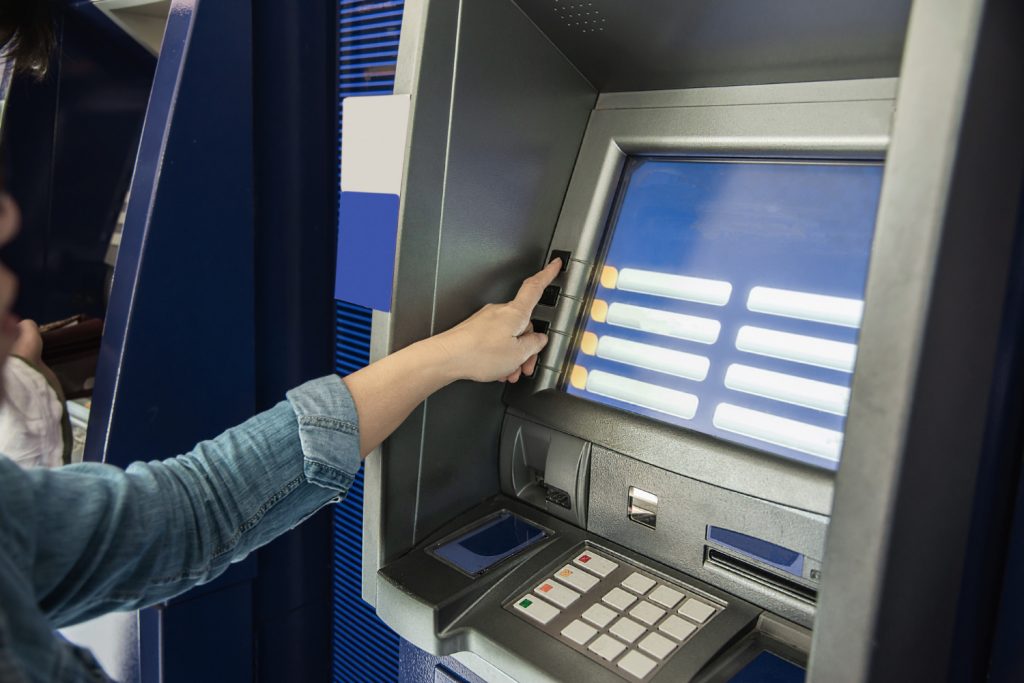
The first step usually begins within the customer’s mobile banking application. After logging into the app using secure credentials, the customer selects the cardless withdrawal option. Depending on the bank, the application may ask the customer to choose the withdrawal amount before arriving at the ATM.
Authentication is the foundation of the entire process. Instead of inserting a debit card, customers verify their identity through multiple security layers. These may include biometric recognition, mobile device authentication, passwords, temporary verification codes, or encrypted digital tokens generated specifically for that transaction.
Many ATMs now include Near Field Communication technology. Customers simply hold their smartphone near the designated contactless reader. The ATM securely exchanges encrypted information with the banking application, verifies the customer’s identity, and authorizes the transaction.
Some banks instead use QR code technology. The ATM displays a unique QR code that customers scan using the banking application. Once scanned, encrypted communication establishes a secure session between the ATM and the customer’s mobile device.
Another approach involves one-time withdrawal codes generated within the banking application. Customers enter the temporary code into the ATM along with additional authentication information. Since these codes expire quickly after generation, they offer enhanced protection against unauthorized use.
Cloud computing also plays a critical role. Authentication requests travel securely between the ATM, banking servers, and mobile application. Real-time communication allows banks to verify account balances, monitor fraud indicators, confirm device identity, and authorize transactions within seconds.
Artificial intelligence increasingly supports fraud prevention during cardless withdrawals. Machine learning systems analyze customer behavior, transaction timing, location, withdrawal amounts, device characteristics, and historical activity. If unusual patterns appear, additional authentication may be required before cash is dispensed.
Encryption protects sensitive information throughout every stage of the transaction. Financial institutions use advanced encryption standards to secure communications between smartphones, ATMs, and banking servers. Even if data transmission were intercepted, encrypted information would remain extremely difficult to interpret.
Biometric authentication represents another significant advancement. Many banking applications now rely on fingerprint sensors or facial recognition already built into modern smartphones. These biometric systems reduce dependence on memorized passwords while providing stronger identity verification.
Some banks are integrating wearable devices into authentication strategies as well. Smartwatches and other connected devices may eventually support secure ATM authentication, providing customers with even greater flexibility.
Importantly, physical debit cards remain available. Cardless ATM withdrawals expand customer options rather than replacing traditional methods entirely. Customers may choose whichever withdrawal method best suits their situation.
Benefits, Challenges, and Future Opportunities for Customers and Banks
The expansion of cardless ATM withdrawals creates significant advantages for both consumers and financial institutions, although certain challenges must still be addressed as adoption continues.
For customers, convenience ranks among the most noticeable benefits. Individuals no longer need to search for their wallets or worry about forgetting debit cards before leaving home. A smartphone often becomes sufficient for accessing banking services and withdrawing cash.
Enhanced security offers another substantial advantage. Card skimming remains one of the most common ATM fraud techniques. Since cardless transactions eliminate physical card insertion, criminals lose an important opportunity to capture card information using hidden skimming devices.
Lost or stolen debit cards also become less disruptive. Even if a physical card is unavailable, customers may continue accessing cash through secure mobile authentication while waiting for replacement cards.
The overall banking experience becomes faster as well. Mobile authentication often requires only a few seconds, especially when biometric verification is enabled. Customers can prepare transactions before reaching the ATM, reducing waiting times during busy periods.
Accessibility may improve for certain customer groups. Mobile applications frequently include customizable text sizes, voice assistance, multilingual interfaces, and accessibility features that enhance usability for individuals with different needs.
Banks benefit through stronger fraud prevention capabilities. Digital authentication generates detailed security data that traditional magnetic stripe transactions cannot provide. Machine learning algorithms can evaluate multiple risk indicators simultaneously before approving transactions.
Operational savings may gradually increase. Fewer replacement cards, improved fraud detection, reduced customer support cases related to lost cards, and more efficient digital services contribute to long-term cost reductions.
Environmental sustainability presents another potential benefit. Although plastic debit cards will remain common for years, greater reliance on digital authentication may eventually reduce plastic production and associated waste.
Despite these advantages, several challenges remain.
Smartphone dependency represents one concern. Customers without compatible devices or those experiencing battery failure may temporarily lose access to cardless withdrawal features. Banks therefore continue supporting traditional card-based access to ensure inclusivity.
Cybersecurity remains an ongoing priority. While digital authentication enhances security, banks must continually defend against evolving cyber threats targeting mobile applications, customer accounts, and network infrastructure. Continuous software updates, encryption improvements, and customer education remain essential.
Customer awareness also influences adoption rates. Some users remain unfamiliar with cardless withdrawal procedures or hesitate to trust new technologies. Banks must provide clear educational materials, in-branch demonstrations, and responsive customer support to encourage wider acceptance.
Infrastructure modernization requires substantial investment. Upgrading thousands of ATMs with NFC readers, QR scanning capabilities, improved software, and enhanced security systems represents a major financial commitment. Large banks possess greater resources for these investments than smaller institutions, potentially creating technological differences across the banking industry.
Interoperability may become increasingly important in the future. Customers expect consistent experiences regardless of ATM location. Industry collaboration could improve compatibility among banks, payment networks, and mobile authentication systems.
Looking ahead, additional innovations may further enhance ATM services. Artificial intelligence could personalize transaction recommendations, predict customer needs, and optimize fraud detection. Voice authentication, behavioral biometrics, and digital identity verification may become more common as security technologies continue advancing.
Conclusion
America’s largest banks are transforming ATM banking through the expansion of cardless withdrawal technology. What was once considered an innovative convenience feature is steadily becoming a standard component of modern banking services. By integrating smartphones, mobile banking applications, biometric authentication, encrypted communication, and intelligent fraud detection, financial institutions are creating safer and more efficient ways for customers to access their money.
The movement toward cardless ATM withdrawals reflects broader changes throughout the financial industry. Consumers increasingly expect seamless digital experiences that combine convenience with strong security protections. Banks recognize these expectations and continue investing in technologies that reduce reliance on physical cards while strengthening customer confidence in digital banking platforms.
Although traditional debit cards will remain an important payment tool for the foreseeable future, their exclusive role in ATM transactions is gradually diminishing. Customers now have greater flexibility to choose between physical and digital authentication depending on their preferences and circumstances. This flexibility improves convenience while reducing several common risks associated with traditional card-based transactions.
Future developments will likely bring even more sophisticated authentication methods, stronger cybersecurity protections, and deeper integration between mobile banking applications and self-service banking machines. Artificial intelligence, behavioral analytics, advanced biometrics, and cloud-based financial services will continue shaping the next generation of ATM experiences.
For consumers, the expansion of cardless ATM withdrawals means easier access to cash, greater protection against fraud, and more convenient banking. For financial institutions, it represents an opportunity to strengthen digital relationships with customers while improving operational efficiency and reducing security risks. As technology continues advancing and customer expectations evolve, cardless ATM withdrawals are poised to become a defining feature of America’s modern banking landscape, demonstrating how traditional financial services can successfully adapt to the demands of an increasingly digital economy.