

Introduction
Bitcoin stands once again at the center of global financial attention. As markets digest rapid technological transformation, monetary policy uncertainty, and structural labor shifts caused by artificial intelligence, a powerful narrative is emerging: Bitcoin may be on the verge of a new record high just as AI-driven job disruption reshapes the global economy.
The convergence of macroeconomic instability and technological acceleration has historically favored decentralized assets. Today, artificial intelligence is not only transforming industries but also challenging traditional employment structures, wage growth patterns, and economic confidence. In response, investors, institutions, and even workers themselves are increasingly exploring alternative stores of value and decentralized financial systems.
This essay explores how AI-driven labor disruption, macroeconomic realignment, institutional adoption, supply dynamics, and behavioral finance are combining to potentially propel Bitcoin to unprecedented levels.
AI-Driven Job Disruption and Economic Anxiety
Artificial intelligence is advancing at a pace unmatched by previous technological revolutions. From generative AI models to autonomous systems, businesses are rapidly automating cognitive tasks once considered uniquely human. White-collar professions—software development, content creation, legal research, accounting, customer service, and financial analysis—are experiencing unprecedented efficiency gains.
However, efficiency comes with displacement. Unlike prior industrial revolutions that primarily replaced manual labor, AI is targeting knowledge-based jobs. Middle-income roles are particularly vulnerable, and as automation scales, job security is weakening across developed and emerging markets alike.
Economic anxiety often precedes shifts in financial behavior. When individuals perceive instability in income or employment prospects, they seek alternative methods to preserve wealth. Traditionally, this meant gold or real estate. In the digital era, Bitcoin has increasingly assumed that role for a new generation of investors.
AI disruption may also widen income inequality. Companies leveraging AI could capture disproportionate profits, concentrating wealth among shareholders and executives. Workers displaced or pressured into lower-wage roles may struggle to accumulate assets through traditional means. This structural imbalance can create monetary and political instability—conditions that historically strengthen interest in decentralized assets outside government control.
Furthermore, governments responding to job displacement may implement stimulus programs, universal basic income trials, or expanded social safety nets. While such policies aim to cushion labor shocks, they often require increased fiscal spending. If funded through monetary expansion, this can intensify concerns about currency debasement—one of Bitcoin’s strongest bullish narratives.
In essence, AI-driven job disruption may unintentionally accelerate the adoption of Bitcoin by increasing distrust in centralized monetary systems and amplifying demand for scarce digital assets.
Monetary Policy, Inflation Cycles, and Liquidity Conditions
Bitcoin’s historical price surges have closely followed global liquidity expansions. When central banks ease monetary policy—through rate cuts or quantitative easing—risk assets often rally. If AI-driven job losses pressure economic growth, policymakers may be forced into accommodative stances sooner than anticipated.
Lower interest rates reduce yields on savings instruments, pushing capital into higher-risk and higher-return assets. Bitcoin, with its fixed supply and high volatility, benefits significantly in such environments. As real yields decline, the opportunity cost of holding non-yielding assets like Bitcoin decreases.
At the same time, structural unemployment caused by AI could create deflationary pressure in wages while asset prices inflate. This divergence may increase wealth concentration and intensify asset speculation. Investors anticipating prolonged monetary support could accumulate Bitcoin as a hedge against currency expansion.
Another critical element is sovereign debt. Many governments already face historically high debt levels. If economic productivity gains from AI do not translate evenly into wage growth, tax revenues may struggle to keep pace with rising social spending. Debt monetization—where central banks indirectly finance deficits—could become more common.
Bitcoin’s appeal lies in its transparent and predictable monetary policy. With a capped supply of 21 million coins and halving cycles that reduce issuance approximately every four years, Bitcoin contrasts sharply with fiat systems that expand supply during crises. As trust in fiscal discipline erodes, capital may flow into assets perceived as resistant to political manipulation.
Additionally, global liquidity conditions are interconnected. Even if one major economy tightens policy, synchronized easing elsewhere can sustain bullish momentum in digital assets. In a world grappling with AI-driven labor shocks, coordinated monetary easing is a plausible scenario—one that historically benefits Bitcoin.
Institutional Adoption and Infrastructure Maturity
Unlike previous bull cycles driven primarily by retail enthusiasm, today’s Bitcoin ecosystem is supported by institutional infrastructure. Major asset managers, publicly traded companies, and financial institutions now participate directly or indirectly in Bitcoin markets.

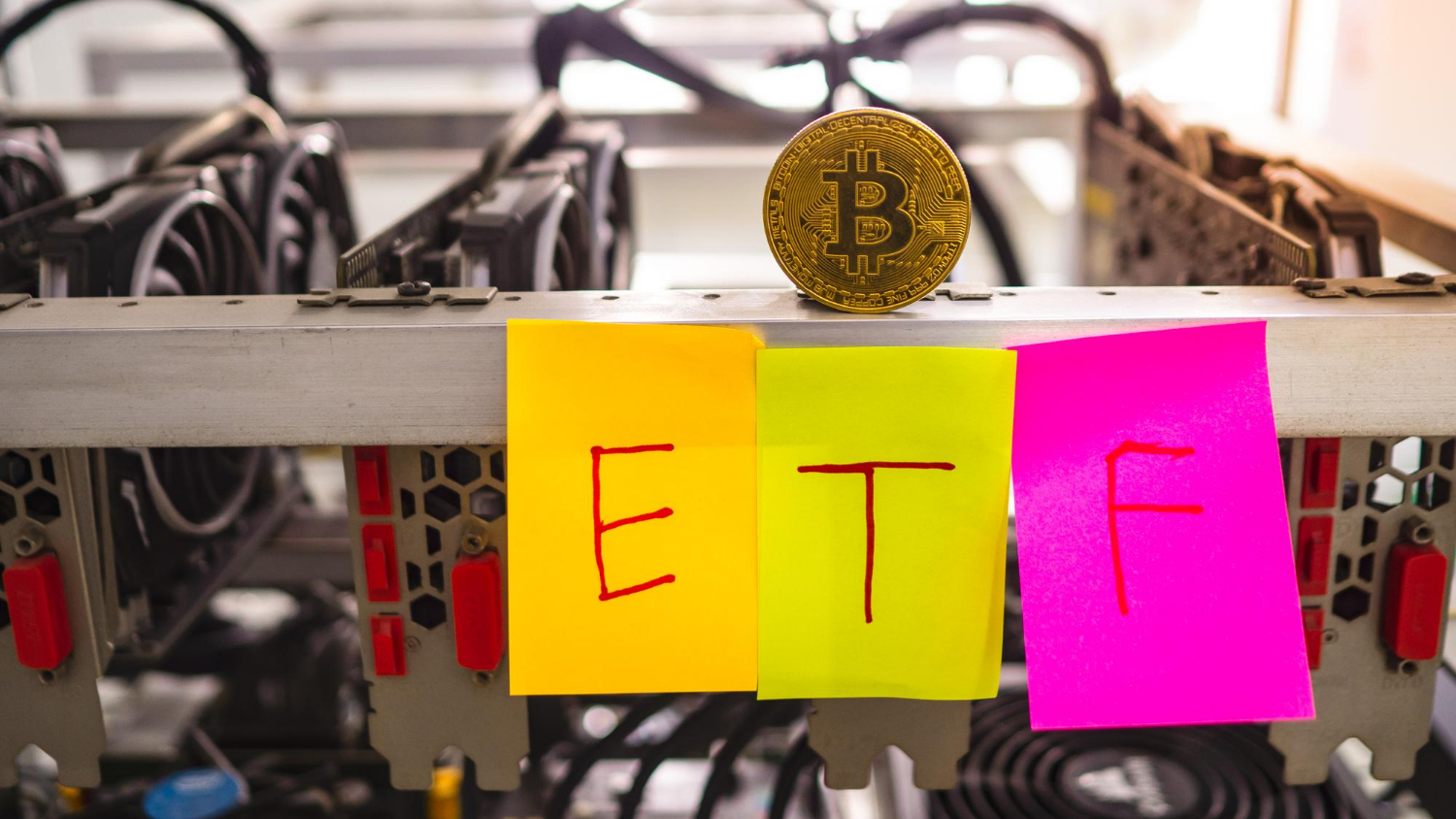
Exchange-traded products, custodial solutions, and regulated trading platforms have significantly lowered entry barriers for large capital allocators. Pension funds, hedge funds, and sovereign wealth funds can now gain exposure within established regulatory frameworks.
AI-driven productivity gains could further accelerate institutional allocation. As corporations improve profit margins through automation, surplus capital may seek diversification. Bitcoin’s low long-term correlation with traditional assets makes it an attractive portfolio component in uncertain macro environments.
Moreover, as AI transforms financial services themselves—through algorithmic trading, predictive analytics, and automated portfolio management—digital assets become more seamlessly integrated into mainstream investment strategies. AI-powered risk models can dynamically allocate capital to Bitcoin based on volatility, liquidity conditions, and macro signals. This technological synergy strengthens the asset’s accessibility and responsiveness to market conditions.
Corporate treasuries may also increase Bitcoin exposure. In environments where inflation risks persist and fiat currencies weaken, holding a portion of reserves in Bitcoin becomes a strategic hedge. Public companies that previously hesitated due to regulatory ambiguity now operate in a clearer environment with established custodial and compliance solutions.
Institutional participation not only brings capital but also reduces extreme volatility over time. Deeper liquidity, derivatives markets, and sophisticated hedging strategies stabilize price swings. As Bitcoin matures, it becomes more attractive to conservative investors, broadening its capital base and increasing the probability of sustained record highs rather than speculative spikes.
Supply Dynamics, Halving Cycles, and Scarcity Economics
Bitcoin’s supply schedule is one of its most powerful drivers. Every four years, mining rewards are halved, reducing the rate of new coin issuance. Historically, these halving events have preceded significant bull markets. Reduced supply growth combined with steady or rising demand creates upward price pressure.
As AI-driven job disruption unfolds, investor demand for scarce assets may increase precisely when Bitcoin’s new supply diminishes. This alignment of macro fear and structural scarcity forms a compelling bullish setup.
Mining economics also play a role. AI advancements improve chip design, data center efficiency, and energy optimization. While this can enhance mining efficiency, the overall issuance cap remains unchanged. Improved operational efficiency may strengthen the financial stability of mining companies, reducing forced selling pressure during downturns.
At the same time, long-term holders continue to accumulate. On-chain data trends frequently show coins moving into cold storage during macro uncertainty. Reduced circulating supply amplifies price sensitivity to new demand inflows.
The narrative of digital scarcity becomes particularly powerful in an era of abundance created by AI. When digital content, services, and even labor become increasingly automated and plentiful, scarcity becomes psychologically valuable. Bitcoin, as a digitally scarce asset, contrasts with a world of infinite AI-generated output.
This dynamic mirrors historical patterns where scarcity gains premium value during periods of technological expansion. Just as gold retained value through industrial revolutions, Bitcoin may function as the scarce digital counterpart in the AI revolution.
Behavioral Finance, Generational Shifts, and Narrative Power
Markets are driven not only by fundamentals but also by narratives. The story of AI reshaping work and society is powerful—and so is the story of Bitcoin as a decentralized safeguard against systemic risk. When these narratives intersect, investor psychology can amplify price movements.
Younger generations, already comfortable with digital ecosystems, are particularly receptive to Bitcoin. As AI automation challenges traditional career paths, younger workers may adopt decentralized finance as both an ideological and practical alternative. Freelancers, digital nomads, and gig-economy participants often prefer borderless, censorship-resistant payment systems.
Social media and algorithmic content distribution further accelerate narrative adoption. AI-driven platforms amplify trending topics, potentially spreading bullish Bitcoin sentiment rapidly during breakout phases. Momentum-driven investment behavior can create self-reinforcing cycles, where price increases validate narratives, attracting more participants.
Fear also plays a role. When job markets appear unstable, individuals may hedge not only financially but psychologically by owning assets perceived as independent of corporate or governmental control. Bitcoin ownership can represent autonomy in uncertain times.
Additionally, wealth generated from AI-centric companies may flow into crypto markets. Employees receiving equity compensation or founders realizing gains often seek high-growth alternative assets. Capital recycling from technology sectors into Bitcoin has precedent in previous cycles.
As AI continues to dominate headlines, the parallel rise of Bitcoin may symbolize a broader transformation—where decentralized networks complement centralized technological power. This narrative duality enhances Bitcoin’s cultural relevance and long-term demand trajectory.
Conclusion
Bitcoin’s potential ascent to a new record high cannot be viewed in isolation from broader economic transformations. Artificial intelligence is redefining productivity, employment, corporate profitability, and policy responses. While AI promises extraordinary efficiency gains, it also introduces labor displacement, income inequality, and fiscal challenges that reshape financial behavior.
In such an environment, Bitcoin’s attributes—fixed supply, decentralized governance, global accessibility, and transparent monetary policy—become increasingly compelling. Monetary easing in response to AI-driven economic stress could inject liquidity into markets. Institutional infrastructure has matured, enabling large-scale participation. Halving cycles reinforce scarcity precisely when demand may rise. Behavioral and generational dynamics further amplify adoption.
The intersection of AI disruption and digital scarcity forms a powerful macro narrative. If economic anxiety grows while liquidity conditions remain supportive, Bitcoin could indeed break into new record territory. Beyond price, however, its significance lies in representing an alternative financial architecture during one of the most profound technological shifts in human history.